Palmistry: 4 Major Palm Lines, Hand Shapes, And Tips
Discover the ancient art of palm reading and interpret your hand's lines to reveal personality traits, life paths, and future insights for beginners.
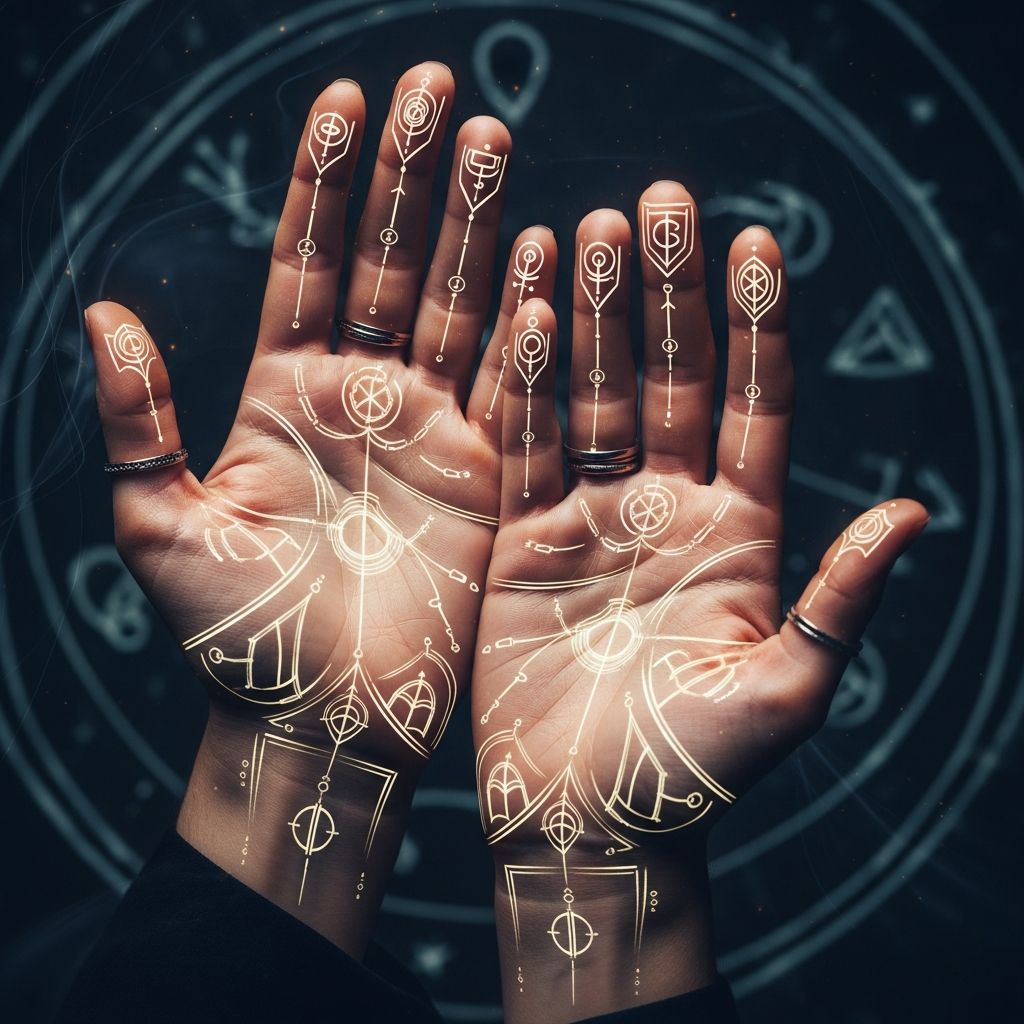
Palmistry, known also as chiromancy, offers a captivating window into one’s character, emotions, and potential future through the study of hand features. This practice, rooted in ancient traditions, examines lines, shapes, and textures on the palms to provide personal revelations. Beginners can quickly grasp core elements to perform insightful readings on themselves or others.
Understanding Hand Basics Before Diving In
Before interpreting specific lines, assess the overall hand structure. The dominant hand typically reflects current life choices and future tendencies, while the non-dominant hand reveals innate qualities and past influences. Position the hand under good lighting, slightly cupping it to make lines prominent. A relaxed environment enhances intuition during readings.
Hand shapes fall into four elemental categories, each linked to personality traits:
- Earth Hands: Square palms with short fingers indicate practicality, reliability, and a grounded nature.
- Air Hands: Square palms with long fingers suggest intellectual curiosity, communication skills, and sociability.
- Fire Hands: Long palms with short fingers denote energy, passion, and leadership qualities.
- Water Hands: Long palms with long fingers point to emotional depth, intuition, and creativity.
Thumbs also matter: A flexible thumb shows adaptability, while a rigid one implies determination. Finger lengths provide further clues—long index fingers signal ambition, prominent ring fingers creativity.
Decoding the Major Palm Lines
The palm features several key lines that form the foundation of any reading. These evolve over time, mirroring life changes.
The Life Line: Vitality and Journey
Curving from the palm’s edge near the thumb base around to between thumb and index finger, the life line reveals physical health, energy levels, and major life shifts—not lifespan duration. A long, deep arc signifies robust vitality and enthusiasm for life. Short or faint lines suggest caution or external influences, while breaks indicate significant changes like relocations or health events. Multiple parallel lines denote extra resilience.
| Life Line Feature | Interpretation |
|---|---|
| Long and deep | Strong vitality, balanced life |
| Short and shallow | Lower energy, easily influenced |
| Breaks or islands | Sudden changes or obstacles |
| Swooping semicircle | Courage and strength |
The Heart Line: Emotions and Relationships
Positioned horizontally under the fingers, this line discloses romantic tendencies and emotional expression. Starting beneath the index finger suggests idealism in love; under the middle finger, self-centeredness. Curved lines indicate passion and openness, straight ones emotional control. Forks or breaks reveal past heartaches or new romantic chapters.
- Straight and short: Reserved in romance.
- Long and curvy: Expressive feelings.
- Wavy: Multiple relationships.
- Circles: Periods of sadness.
The Head Line: Intellect and Decision-Making
Running across the palm’s middle, the head line unveils mental approach and learning style. Straight lines denote logic and practicality; curved ones creativity and intuition. Long lines show focus and intellect; short ones prioritize action over thought. Separation from the life line hints at independence and adventure.
Wavy head lines may indicate scattered focus, while deep, clear ones suggest wisdom and advisory talents.
The Fate Line: Career and Destiny
Not always present, this vertical line from the palm base upward reveals career path and life purpose. A strong, straight fate line points to clear direction and success; faint or broken ones suggest career shifts or external dependencies. Starting from the life line base ties destiny to personal vitality.
Exploring Palm Mounts
Mounts are fleshy pads beneath fingers and across the palm, associated with planetary influences and traits. Well-developed mounts amplify qualities; flat ones minimize them.
- Mount of Venus: Under thumb—love, sensuality, vitality.
- Mount of Jupiter: Under index—ambition, leadership.
- Mount of Saturn: Under middle—discipl ine, responsibility.
- Mount of Apollo: Under ring—creativity, fame.
- Mount of Mercury: Under pinky—communication, business acumen.
- Mount of Luna: Opposite thumb—imagination, intuition.
Prominent mounts correlate with dominant personality aspects; for example, a high Mount of Apollo favors artistic pursuits.
Minor Lines and Markings
Beyond majors, minor lines add nuance. The Sun line parallels the fate line, indicating recognition and joy. Marriage lines on the pinky edge predict relationships. Travel lines near the percussion side forecast journeys.
Markings like stars (sudden fame or trouble), crosses (obstacles), squares (protection), islands (challenges), and triangles (talent) modify interpretations. A star on the life line might signal a pivotal event.
Practical Techniques for Accurate Readings
Combine elements for holistic insights: A strong head line with a prominent Mount of Mercury suits business success. Track changes via a palm journal with dated tracings. Use baby powder for faint lines. Relax and trust intuition—overanalysis hinders flow.
Cross-reference hands: Dominant shows actioned potential, non-dominant innate gifts. Practice on varied hands to build skill.
Frequently Asked Questions
Which hand do I read first?
Use the dominant for present/future, non-dominant for potentials.
Can palm lines change?
Yes, they evolve with life experiences, reflecting growth.
Is palmistry scientific?
While ancient, some studies link hand features to traits, though not empirically proven.
How long does a reading take?
Beginners can do basics in 10-15 minutes; advanced in 30+.
What if a line is missing?
Absent lines like fate indicate self-made paths without rigid destiny.
Advanced Tips for Aspiring Palm Readers
Study finger phalanges: Upper for intellect, middle for will, lower for physicality. Nail shapes reveal health—square for vitality, brittle for nervousness. Integrate with astrology for layered readings. Ethical practice respects privacy; frame insights positively.
Practice consistently, starting with friends. Online tools can aid beginners but hands-on builds true intuition.
Historical Roots of Palmistry
Originating in India over 3,000 years ago, palmistry spread via Greek, Chinese, and Egyptian cultures. Aristotle referenced it; medieval Europe refined it. Today, it blends tradition with modern intuition.
References
- Hocus Pocus: The Easy Guide to Palm Reading 101 — Lauren Conrad. 2016-10. https://laurenconrad.com/blog/2016/10/hocus-pocus-the-easy-guide-to-palm-reading-101/
- The Complete Palm Reading Guide for Beginners — Cosmopolitan. 2024. https://www.cosmopolitan.com/lifestyle/a69043787/how-to-read-palms/
- A Beginner’s Guide To Reading Palms — MindBodyGreen. 2023. https://www.mindbodygreen.com/articles/palm-reading-for-beginners
- Palm Reading — Independence Bigs (PDF). 2018-09. https://www.independencebigs.org/wp-content/uploads/2018/09/Week33.pdf
- Palm Reading Guide: Learn Palmistry Basics & Meanings — Palmyst. 2024. https://palmyst.com/blog/palm-reading-guide
- Palmistry 101: A Beginners Guide To Reading Palms — Keen. 2023. https://www.keen.com/articles/spiritual/palmistry-101-guide
Similar Articles








Read full bio of Sneha Tete