Spiritual Altars: 10-Step Guide To Create Your Sacred Space
Discover the profound history, meanings, and practical steps to build a personal spiritual altar that enhances your connection to the divine and fosters inner transformation.
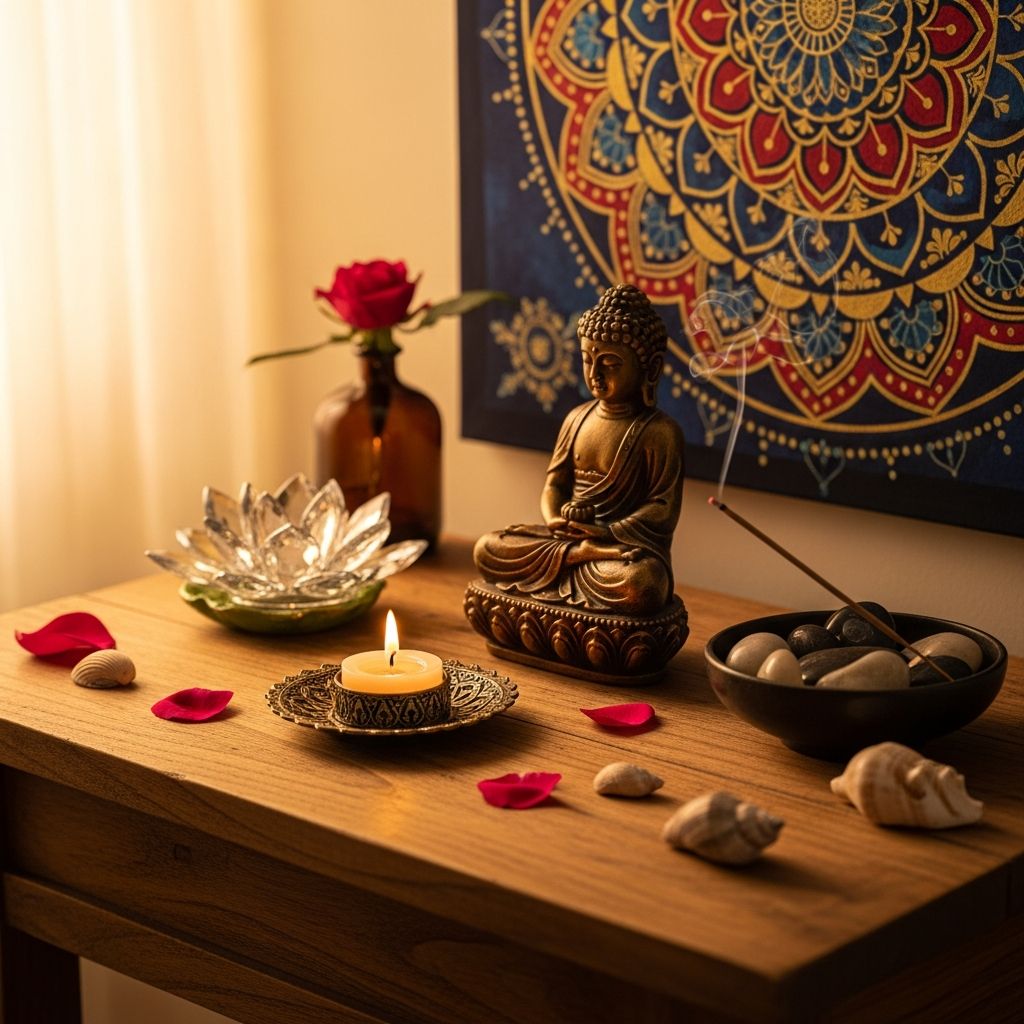
Spiritual altars serve as powerful focal points for connecting the physical world with higher realms, enabling practices like prayer, meditation, and intention-setting. These sacred setups, found in diverse traditions, act as portals for personal transformation and divine communion.
The Ancient Roots of Sacred Altars Across Cultures
From prehistoric times to modern spirituality, altars have anchored humanity’s quest for the transcendent. In ancient Mesopotamia and Egypt, elevated stone platforms hosted offerings to gods, marking sites where earthly offerings met celestial forces. Biblical accounts describe altars as structures for sacrifices, often built with uncut stones to preserve natural purity, as commanded in Exodus 20:25, symbolizing unadulterated devotion.
Indigenous traditions worldwide feature altars too. Native American medicine wheels and African ancestral shrines use natural elements like stones and feathers to honor spirits and lineage. In Hinduism, home mandirs house deities’ images, while Taoist practices incorporate ancestral tablets for harmony between living and deceased realms. These spaces transcend religion, embodying universal human impulses toward reverence and ritual.
Christian history integrates altars centrally, from Old Testament patriarchs like Abraham erecting them post-divine encounters (Genesis 22:9) to church “altars” for communion and prayer, reminding believers of Romans 12:1’s call to living sacrifice. Even in contemporary metaphysics, altars evolve as personal sanctuaries, free from dogma, reflecting individual spiritual journeys.
Core Symbolism and Functions in Modern Practice
At heart, a spiritual altar concentrates energy, bridging material and ethereal domains. It functions as a platform where spiritual laws activate, authorizing divine or ancestral influences in daily life—much like Apostle Joshua Selman describes it as a legal interface between spirit and earth realms.
- Connection: Facilitates communion with guides, ancestors, or higher self through focused rituals.
- Manifestation: Amplifies intentions, turning abstract desires into tangible energy fields.
- Healing: Supports emotional release, shadow work, and cleansing via symbolic items.
- Devotion: Expresses gratitude and alignment with core values.
- Transformation: Evolves with the practitioner, mirroring inner growth.
Unlike idols, altar objects represent energies or archetypes, not objects of worship themselves. A crystal might evoke earth stability, while a candle symbolizes illuminating insight. This setup creates sanctity, enhancing spells, tarot readings, or group meditations by unifying focus.
Defining Your Altar’s Unique Purpose
Before assembling, clarify intent: Is it for daily meditation, protection, abundance, or ancestral veneration? This guides element selection. A manifestation altar might feature green crystals and coins; a healing one, selenite wands and herbal sachets. Journaling prompts like “What energies do I seek?” refine this vision, ensuring the space resonates personally.
| Purpose | Key Focus | Example Elements |
|---|---|---|
| Meditation | Inner peace | Incense, singing bowl, serene statue |
| Manifestation | Abundance | Vision board, citrine, bay leaves |
| Ancestral | Lineage honor | Photos, flowers, offerings |
| Protection | Shielding | Black tourmaline, salt, athame |
| Healing | Restoration | Amethyst, essential oils, journal |
Selecting the Ideal Location and Base
Opt for a quiet, accessible spot: a windowsill for natural light, bedside table for morning rituals, or dedicated shelf. Avoid high-traffic areas to maintain energy purity. Cleanse the space with sage smudging or sound cleansing first. The base—a cloth-covered table, wooden box, or natural stone—anchors the altar, with colors matching intent (e.g., white for purity, red for passion).
Essential Elements to Incorporate
Layer items representationally, starting with the four elements for balance:
- Earth: Crystals, stones, plants—grounding stability.
- Air: Feathers, incense—clarity and inspiration.
- Fire: Candles, sun symbols—transformation and will.
- Water: Bowls, shells—emotions and flow.
Add personal touches: photos of loved ones, meaningful jewelry, or deity statues. Seasonal items like autumn leaves refresh relevance. Arrange intuitively, often in a triangular layout symbolizing trinity or elevation.
Step-by-Step Guide to Building Your Altar
- Set Intention: Meditate on purpose; write a dedication statement.
- Prepare Space: Cleanse physically and energetically.
- Lay Foundation: Cover base with symbolic cloth.
- Place Elements: Add representatives of earth, air, fire, water centrally.
- Incorporate Personal Items: Position meaningful objects.
- Add Focal Point: Central candle, crystal, or image for energy convergence.
- Bless and Activate: Light candle, recite affirmation, ring bell.
- Maintain Regularly: Dust, refresh offerings weekly.
- Evolve Over Time: Update as intentions shift.
- Close Rituals: Thank energies before leaving.
Daily Rituals and Maintenance Practices
Engage daily: Light a candle for 5 minutes, offering gratitude or prayers. Weekly, refresh water bowls and rotate seasonal items. Monthly full moon cleansings with moonlight recharge crystals. This consistency builds potency, turning the altar into a living ally. Track progress in a nearby journal to witness manifestations.
Common Challenges and Solutions
Doubts arise: “Is it ‘right’?” Trust intuition—there’s no universal template. Clutter? Rotate items seasonally. Distractions? Set timed rituals. Energy stagnation? Perform full cleansings with saltwater or palo santo.
Advanced Altar Variations
Portable travel altars fit boxes with mini-elements for nomads. Group altars foster communal energy in covens. Digital altars via apps with virtual candles suit tech-savvy practitioners, though physical tangibility amplifies impact.
FAQs
What if I lack space for a full altar?
Use a single crystal or photo as a micro-altar on your desk.
Can altars be outdoors?
Yes, garden stones or patio setups connect with nature spirits.
How do I know it’s working?
Notice synchronicities, emotional shifts, or fulfilled intentions.
Are altars only for specific religions?
No, they’re adaptable to any belief system or secular spirituality.
What if items break or fade?
Replace mindfully; it signals evolution.
Transformative Power of Your Sacred Space
Your altar mirrors your soul’s landscape, evolving as you do. It holds prayers, amplifies power, and invites peace. Embrace it as a portal for ongoing growth.
References
- The History and Meaning of Spiritual Altars (+10 Steps to Create Your Own Sacred Space at Home — Metaphysical Works. 2025-03-01. https://metaphysicalworks.com/blogs/news/the-history-and-meaning-of-spiritual-altars-10-steps-to-create-your-own-sacred-space-at-home
- Understanding Altars: What is an altar, and how to bring altar magic into my life — We’Moon. N/A. https://wemoon.ws/blogs/magical-arts/understanding-altars-what-is-an-altar-and-how-to-bring-altar-magic-into-my-life
- WHAT IS AN ALTAR? – APOSTLE JOSHUA SELMAN — YouTube (Christocentric Message). N/A. https://www.youtube.com/watch?v=c-13eUpms0g
- Bible Study: The Way of the Altar — Pavielle the Purpose Coach. N/A. https://pavielle.com/bible-study-the-way-of-the-altar/
- What is an altar? — GotQuestions.org. N/A. https://www.gotquestions.org/what-is-an-altar.html
- Altar Meaning – Bible Definition and References — Bible Study Tools. N/A. https://www.biblestudytools.com/dictionary/altar/
Similar Articles






Read full bio of Sneha Tete