Rune Stones: 5 Key Runes, History, And How To Read Them
Discover the ancient power of rune stones: their history, meanings, and how to harness them for insight and guidance in modern life.
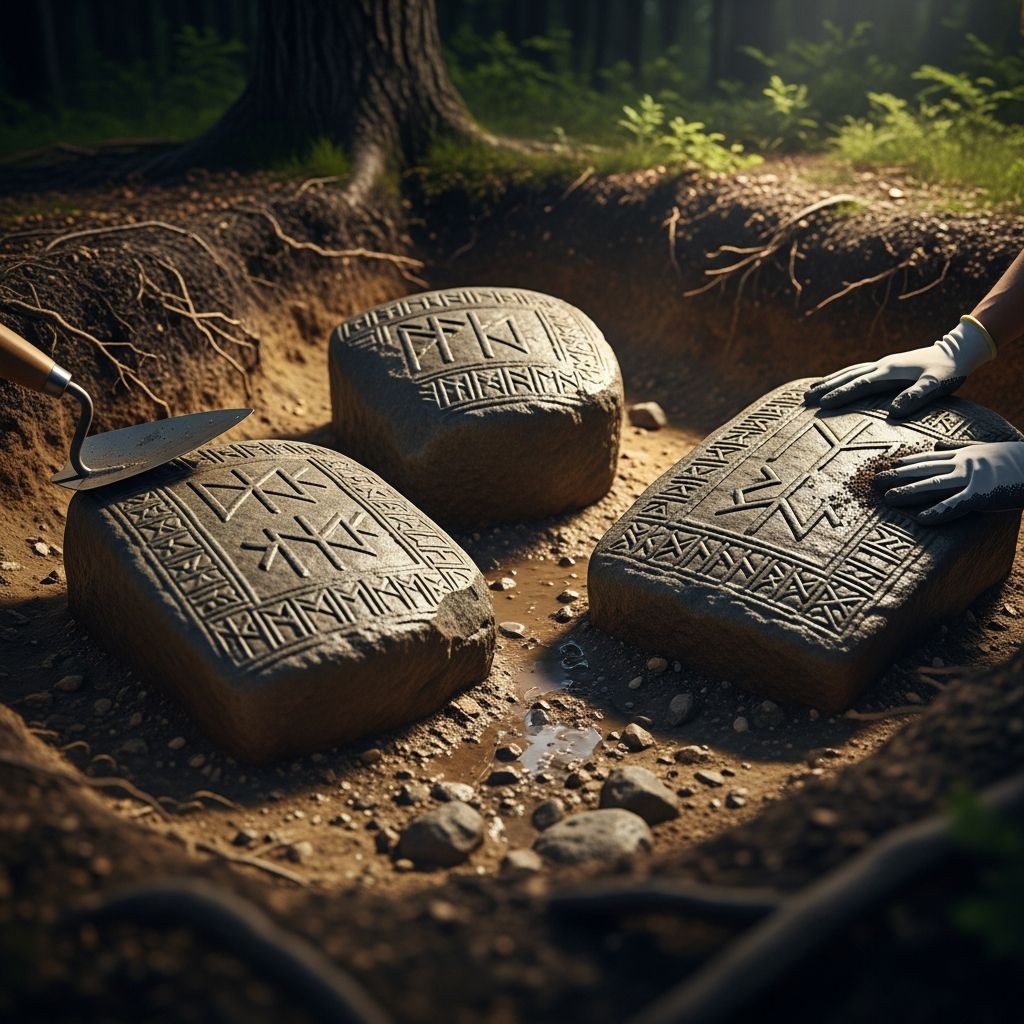
Rune stones represent one of the most enduring symbols of ancient Germanic and Norse culture, serving as both practical writing tools and profound instruments of divination. Carved with angular symbols known as runes, these stones have captivated people for centuries, offering glimpses into history, mythology, and personal destiny.
The Ancient Roots of Runic Writing
The story of rune stones begins in the shadowy dawn of the early centuries CE, when Germanic tribes in Scandinavia developed a unique script. Emerging around the 1st to 2nd century AD, runes were likely inspired by Old Italic alphabets encountered through trade and conflict with Mediterranean cultures. The oldest confirmed rune stone, discovered in 2021 at the Svingerud grave field in Norway, dates to between 1 and 250 CE, predating the Viking Age by centuries.
These early inscriptions appear on small objects like brooches and weapons, hinting at runes’ initial use for everyday labeling and ownership marks. By the Roman Iron Age (1-400 CE), runes had evolved into a sacred system, carved into sandstone and other durable materials. The script’s angular design suited carving into hard surfaces, distinguishing it from curved Roman letters.
Rune stones proliferated during the Viking Age (800-1050 CE), with over 6,000 known examples across Scandinavia, particularly in Sweden, Norway, and Denmark. Most were erected as memorials between 950 and 1100 CE, commemorating fallen warriors, explorers, or family members. These towering granite slabs, often painted red for visibility, recorded deeds, travels, and even early Christian prayers as faith shifted in the region.
Evolution of the Runic Alphabets
The runic system underwent several transformations to adapt to linguistic changes. The foundational set, called the
Elder Futhark
, consists of 24 symbols divided into three groups known as aettir. Named for the first six runes—Fehu, Uruz, Thurisaz, Ansuz, Raidho, and Kenaz—this alphabet emerged around the 2nd century CE.As Proto-Norse evolved into Old Norse, the Elder Futhark branched into the Younger Futhark (16 runes) around the 8th century, simplifying the script for Viking practicality but sacrificing some phonetic nuance. Later, the Anglo-Saxon Futhorc expanded to 33 runes to accommodate English dialects. Today, modern practitioners revive the Elder Futhark for its rich esoteric meanings.
| Era | Alphabet | Number of Runes | Key Use |
|---|---|---|---|
| 2nd-8th Century CE | Elder Futhark | 24 | Magical inscriptions, early memorials |
| 8th-12th Century CE | Younger Futhark | 16 | Viking memorials, trade records |
| 5th-11th Century CE | Anglo-Saxon Futhorc | 33 | English runic texts |
Decoding the Symbolism of Key Runes
Each rune transcends mere letters, embodying layered meanings drawn from nature, mythology, and human experience. Here’s an exploration of select Elder Futhark runes:
- Fehu (ᚠ): Symbolizing cattle and wealth, it represents prosperity, mobile assets, and new beginnings. In readings, it signals financial gain or the need to manage resources wisely.
- Uruz (ᚢ): Depicting the aurochs (wild ox), this rune evokes primal strength, health, and vitality. It calls for harnessing personal power during challenges.
- Ansuz (ᚨ): Linked to Odin, the Allfather, it governs communication, wisdom, and divine inspiration. Upright, it promises clarity; reversed, it warns of misunderstandings.
- Raidho (ᚱ): The wagon rune signifies journeys, rhythm, and justice. It encourages alignment with life’s path, whether physical travel or spiritual evolution.
- Kenaz (ᚲ): Torchlight embodies creativity, knowledge, and transformation. It illuminates hidden truths and sparks innovation.
These interpretations blend historical linguistics with modern esoteric traditions, where runes serve as oracles. Practitioners assign upright and reversed (merkhstave) meanings to add depth, though ancient evidence for reversals is debated.
Rune Stones in Historical Contexts
Beyond memorials, rune stones chronicled Viking exploits. The Jelling stones in Denmark, raised by King Harald Bluetooth around 960 CE, boast of his conquests and conversion to Christianity, blending pagan and Christian motifs. Norway’s Tune stone from the 5th century records a widow’s tribute: “I, widow of Vodurid, Lags-Felle, created this rune.”
Stones often marked boundaries, celebrated trade voyages to Byzantium or England, or invoked protection. Their public placement ensured literacy among Vikings, countering stereotypes of illiterate raiders. As Christianity spread post-1000 CE, runes persisted on churches, evolving into medieval scripts before fading with the Latin alphabet’s dominance.
Modern Revival: Runes as Divination Tools
In contemporary spirituality, rune stones have resurged as accessible divination aids. Sets typically feature 24 Elder Futhark runes plus a blank “Wyrd” stone for fate’s unpredictability. Made from stone, wood, or crystal, they connect users to ancestral wisdom.
To cast runes:
- Prepare your space: Cleanse stones with sage or moonlight. Focus on a clear question.
- Draw or cast: Pull three runes for past, present, future; or cast freely onto cloth for patterns.
- Interpret intuitively: Combine rune meanings with positions and personal intuition.
- Journal insights: Track patterns over time for deeper understanding.
Common spreads include the Norns (fate’s weavers: Urd—past, Verdandi—present, Skuld—future) or the nine-rune grid for comprehensive life overviews.
Care, Charging, and Ethical Use
Maintain rune stones by storing them in a pouch away from sunlight. Charge them during full moons or by burying briefly in earth to attune to elemental energies. Ethical practice involves respecting free will—runes guide, not dictate.
Beginners should study phonetic values alongside symbolism, as understanding pronunciation aids meditation. Combine with journaling or meditation for transformative results.
Frequently Asked Questions
What are rune stones made of?
Historically, granite or sandstone; modern sets use ceramic, wood, or gemstones like amethyst for amplified energy.
Can anyone use runes for divination?
Yes, no formal training required. Start with simple yes/no draws to build confidence.
Are runes only Norse?
Primarily Germanic/Scandinavian, with influences from Italic scripts. Variants appear in Anglo-Saxon and Gothic contexts.
How do reversed runes work?
Modern innovation: upright for positive flow, reversed for blocks or internal lessons, though ancient carvings rarely used them.
Where can I find authentic rune stones?
Museums like the University of Oslo display originals; replicas suit personal practice.
Integrating Runes into Daily Rituals
Incorporate runes by drawing a daily rune upon waking, placing it on your altar, or engraving on jewelry for talismans. Fehu on a wallet attracts abundance; Algiz (ᛉ) for protection shields against negativity. Group readings foster community bonding in modern pagan circles.
Runes also aid decision-making: for career crossroads, cast Raidho and Perthro (ᛈ, mystery) to reveal optimal paths. Their versatility spans love, health, and shadow work, confronting inner demons via runes like Hagalaz (ᚺ, disruption).
References
- History and significance of the rune stones — Battle-Merchant. 2023. https://www.battlemerchant.com/en/blog/history-and-significance-of-the-rune-stones
- Found the world’s oldest rune stone — Museum of Cultural History, University of Oslo. 2021-10-21. https://www.khm.uio.no/english/news/found-the-world-s-oldest-rune-stone.html
- The Oldest Runestone Conveys Norse Language Before the Viking Age — Discover Magazine. 2024. https://www.discovermagazine.com/the-oldest-runestone-conveys-norse-language-before-the-viking-age-47061
- Rune Stones — Milwaukee Public Museum. N/A. https://www.mpm.edu/index.php/research-collections/anthropology/online-collections-research/scandinavian-archaeology/rune-stones
- The History and Magical Origins of Runes — Briona Jolie. N/A. https://brionajolie.com/the-history-and-magical-origins-of-runes/
- The Origins of the Runes — Norse Mythology for Smart People. N/A. https://norse-mythology.org/runes/the-origins-of-the-runes/
- Rune stones — National Museum of Denmark. N/A. https://en.natmus.dk/historical-knowledge/denmark/prehistoric-period-until-1050-ad/the-viking-age/power-and-aristocracy/rune-stones/
Similar Articles



Read full bio of medha deb