Discovering Pendulum Divination: Ancient Wisdom
Explore centuries of pendulum divination practices and their spiritual significance.
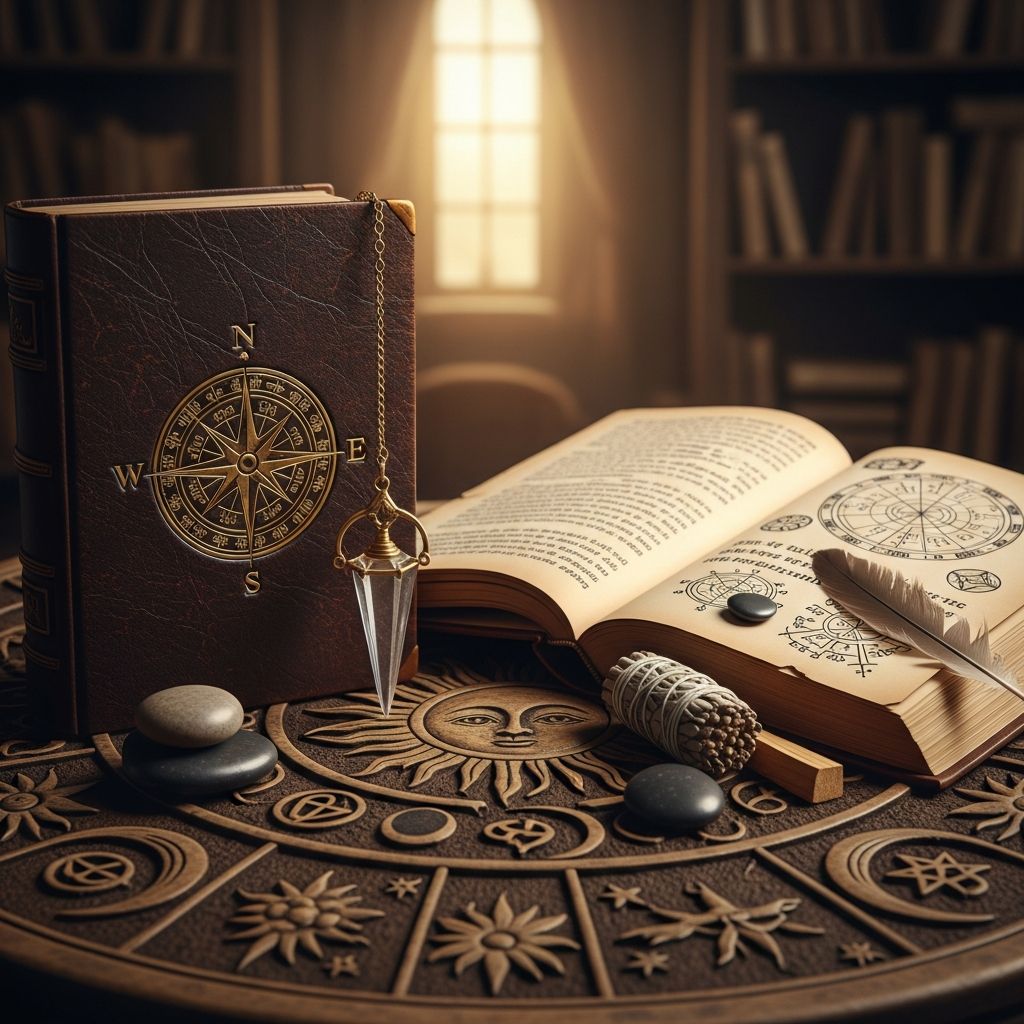
For thousands of years, practitioners across the globe have relied upon a simple yet profound tool to access guidance beyond the physical realm. The pendulum, suspended from a delicate chain or cord, has served as a bridge between the conscious and unconscious mind, offering answers to life’s most pressing questions. Whether used in ancient temples or contemporary spiritual spaces, this humble instrument continues to captivate those seeking deeper understanding and connection with their intuition.
Tracing the Roots: Where Pendulum Practice Originated
The practice of working with suspended weights dates back millennia, with evidence suggesting that ancient civilizations understood the power of these tools long before modern science could explain them. Archaeological discoveries reveal that pendulum-like objects appeared across multiple continents, demonstrating that this practice was not confined to a single culture but emerged independently in different societies.
In ancient Egypt, practitioners employed pendulums for practical and ceremonial purposes. Records indicate that Egyptian diviners used these tools to determine the sex of unborn children and to make agricultural decisions, such as identifying optimal planting locations for crops. The Egyptians believed that pendulums could access universal knowledge and divine wisdom through their oscillating movements.
Ancient China similarly embraced pendulum use, incorporating weighted objects suspended from strings into their divination systems. Chinese practitioners recognized the pendulum’s ability to respond to energetic frequencies and used these tools to receive guidance from spiritual sources.
In ancient Greece, the practice gained prominence through the famous Pythian Oracle of Delphi around 400 BCE, where pendulums were utilized to deliver prophecies and divine messages. The Greeks elevated pendulum use to an art form, often employing precious gemstones suspended from elegant chains, reflecting their belief in the material’s significance to the divination process.
Ancient Mesopotamia, often called the cradle of civilization, demonstrates that pendulum dowsing served practical purposes alongside spiritual ones. Early practitioners in this region used pendulum-like instruments to locate underground water sources and mineral deposits, making these tools essential for survival in agrarian societies.
Medieval Perspectives and Religious Controversy
As pendulum practice spread throughout Europe during the Middle Ages and Renaissance, attitudes toward this tool became increasingly divided. While some communities viewed pendulums as valuable instruments for locating water, minerals, and hidden treasures, religious authorities grew increasingly suspicious of the practice.
The Catholic Church developed a particularly hostile stance toward pendulum divination. Pope John XXII began persecuting individuals who used pendulums around 1320 CE, viewing the practice as a form of witchcraft and devil worship. This ecclesiastical opposition was so powerful that pendulums remained largely forbidden until the mid-1700s. Notably, even after this papal condemnation, the Vatican itself hired Abbé Mermet during the early 1900s to locate lost treasures using brass pendulums, demonstrating a complex relationship between institutional authority and practical efficacy.
Protestant reformers continued the Church’s restrictive stance. Martin Luther explicitly listed divining for metals as a form of occultism that violated religious commandments. In 1662, Jesuit scholar Gaspar Schott declared divining with rods to be “superstitious, or rather satanic,” though he acknowledged uncertainty about whether supernatural forces actually guided the rod’s movement.
Despite official condemnation, the practice persisted in various regions. In 17th-century southern France, authorities used pendulums to track criminals and identify heretics, leading the Inquisition to issue a decree in 1701 forbidding the practice for purposes of justice.
Scientific Investigation and the Ideomotor Reflex
The nineteenth century brought renewed interest in understanding how pendulums actually function. Researchers sought to explain the mechanism behind pendulum movement through scientific principles rather than mystical claims.
In 1833, scientist Michel Eugène Chevreul made a significant discovery that would transform understanding of pendulum use. He identified what became known as the Ideomotor Reflex, a phenomenon where unconscious muscular movements in the wrist and arm cause the pendulum to swing in particular directions. This discovery suggested that pendulum movement might be generated by the practitioner’s own nervous system, influenced by their subconscious mind and intuitive responses, rather than by external supernatural forces.
Understanding the ideomotor reflex does not necessarily diminish the value of pendulum work. Rather, it provides a mechanism through which the pendulum can serve as a tool for accessing subconscious knowledge, intuitive wisdom, and bodily intelligence. Many contemporary practitioners view the ideomotor reflex as the bridge between the conscious and unconscious mind, making pendulums valuable instruments for personal insight regardless of one’s metaphysical beliefs.
The Nineteenth and Twentieth Century Renaissance
The 1800s witnessed a dramatic resurgence of interest in pendulum practice and other esoteric disciplines. The spiritualist movement, which gained tremendous popularity during this period, embraced pendulums as tools for communicating with spiritual entities and conducting séances.
Influential occultists incorporated pendulum work into their mystical systems. Samuel Liddell MacGregor Mathers, a co-founder of the Hermetic Order of the Golden Dawn, integrated pendulum use into the organization’s magical practices, cementing its status as a legitimate divination instrument within Western esoteric traditions.
During this era, practitioners refined and formalized the techniques of pendulum use. Diviners developed detailed systems for interpreting pendulum movements, created specialized divination boards to work with pendulums, and established protocols for cleansing and consecrating these tools before use.
Methods and Techniques in Contemporary Practice
Modern practitioners employ pendulums in several distinct ways, each suited to different questions and intentions:
Yes-or-No Divination
The most straightforward application involves asking the pendulum binary questions and interpreting its directional movement as affirmative or negative responses. Practitioners typically establish a personal correspondence system, such as clockwise swinging indicating “yes” and counterclockwise indicating “no,” though these conventions vary among different practitioners.
Location and Dowsing Applications
Pendulums continue to be used in their historical capacity for dowsing, the practice of locating underground resources. As a practitioner moves the pendulum across a map or landscape, variations in the pendulum’s swing intensity, direction, and frequency are interpreted to identify coordinates, pathways, or locations of water sources, minerals, energetic ley lines, or other sought-after targets.
Divination Board Methodology
Another widespread technique involves pairing the pendulum with a divination board. These boards typically display letters, numbers, or symbols arranged in circular or rectangular patterns. The practitioner suspends the pendulum above the board, and its movements direct attention toward specific symbols or spell out messages that address the seeker’s questions.
Energy and Chakra Assessment
Practitioners use pendulums to evaluate energetic imbalances within the body’s chakra system. By suspending the pendulum over different bodily energy centers, practitioners observe the quality and direction of movement to identify areas requiring attention or healing.
Understanding the Mechanics Behind Pendulum Movement
Pendulums function as tools that amplify subtle muscular responses and translate internal knowing into observable physical movement. The practitioner’s subconscious mind, intuition, and accumulated wisdom direct micro-movements in the hand and arm, causing the pendulum to move in ways that convey information.
The pendulum responds to the practitioner’s energetic field in conjunction with their higher self and intuitive faculties. This interaction explains why different practitioners may receive different answers from the same pendulum regarding the same question—the tool responds to the unique energetic signature and intuitive state of each individual user.
Many spiritual practitioners view the pendulum’s movement as representing the dialogue between the conscious mind seeking answers and the deeper wisdom that resides beyond ordinary perception. The pendulum becomes a translator, converting this non-verbal knowing into a language of movement that the conscious mind can interpret and understand.
Practical Considerations for Beginning Practice
Those interested in exploring pendulum work should consider several foundational elements:
- Material Selection: Pendulums are crafted from various materials including metals, crystals, gemstones, and wood. Many practitioners believe the material carries its own energetic properties that influence the divination process.
- Intention Setting: Before using a pendulum, practitioners typically establish clear intentions and formulate specific questions in precise language.
- Establishing Correspondences: Users develop personal systems for interpreting pendulum movements, deciding what different directions and speeds indicate regarding their questions.
- Energetic Preparation: Many practitioners recommend grounding exercises and meditative practices before conducting pendulum sessions to achieve a calm, receptive mental state.
- Regular Practice: Consistent use strengthens the connection between practitioner and tool, enhancing clarity and accuracy of divination over time.
Critical Perspectives and Ongoing Skepticism
Throughout history, pendulum practice has attracted both devotion and doubt. Skeptics have questioned whether pendulums provide genuine access to information beyond the practitioner’s own knowledge, or whether they merely reflect the operator’s unconscious biases and expectations.
Natural philosopher Robert Boyle, observing a 17th-century diviner demonstrate hazel dowsing rods, remained unconvinced despite acknowledging the practitioner’s apparent sincerity in their belief. This historical example illustrates that skepticism about pendulum efficacy is not a modern phenomenon but has persisted across centuries.
Contemporary practitioners address these critiques by noting that the ideomotor reflex does not negate the value of pendulum use. Rather, accessing one’s own subconscious knowledge and intuitive wisdom represents a legitimate and valuable form of self-inquiry, regardless of whether external mystical forces are involved in the process.
The Enduring Legacy of Pendulum Divination
From ancient temples to modern homes, pendulums have maintained their position as tools for inquiry, guidance, and self-discovery. The practice’s survival across thousands of years, despite religious opposition and scientific skepticism, suggests that individuals continue to find genuine value in working with these instruments.
Whether understood through mystical frameworks emphasizing connection to unseen energies or through scientific frameworks emphasizing the power of the subconscious mind, pendulums offer a tangible method for accessing wisdom that exists beyond the reach of logical analysis. They provide a visual representation of the unseen forces that shape human experience and a means of interpreting messages that reside in the deeper regions of consciousness.
The pendulum’s enduring appeal reflects humanity’s persistent desire to access guidance, make meaningful decisions, and connect with dimensions of understanding that transcend ordinary perception. Whether one approaches the pendulum as a spiritual instrument, a psychological tool, or a divination method, its capacity to facilitate self-inquiry and insight remains relevant for contemporary seekers navigating the complexities of modern life.
Frequently Asked Questions About Pendulum Divination
How do I choose the right pendulum for my practice?
Selection often involves personal intuition and attraction to particular materials or designs. Many practitioners recommend handling different pendulums to sense which one resonates with your energy, rather than selecting based solely on appearance or information.
Can anyone use a pendulum, or does it require special abilities?
Pendulum work is accessible to anyone willing to practice with genuine intention and patience. While some individuals may develop greater sensitivity more quickly, the basic principles apply universally to interested practitioners.
How accurate are pendulum readings?
Accuracy depends on numerous factors including the clarity of your question, your emotional state during divination, and your skill in interpreting pendulum movements. Like any divination tool, pendulums are most valuable when used as instruments for self-reflection rather than as absolute predictive devices.
Should I cleanse my pendulum before use?
Many practitioners recommend cleansing pendulums regularly through methods such as moonlight exposure, smudging, or holding them under running water to clear accumulated energetic impressions and maintain optimal functioning.
References
- Unveiling the Mysteries: Pendulum Use in Divination & Magick — Alchemy and Aura. https://alchemyandaura.com/blogs/news/unveiling-the-mysteries-pendulum-use-in-divination-and-magick
- The History of a Pendulum — Wilde Folk. https://shopwildefolk.com/blogs/news/the-history-of-a-pendulum
- A History of Pendulum Dousing — Goddess I AM. https://www.goddessiam.com/blogs/learn-about/a-history-of-pendulum-dousing
- How to Use a Pendulum: History, Methods, and Meaning — The Foragers Daughter. https://theforagersdaughter.com/blogs/the-foragers-field-journal/how-to-use-a-pendulum-history-methods-and-meaning
- The History of Pendulums: Divination & Trusted Psychics — Psychic Today. https://psychictoday.com/blog/2021/12/11/history-of-pendulums/
- Dowsing — Wikipedia. https://en.wikipedia.org/wiki/Dowsing
Similar Articles








Read full bio of medha deb