Reading Your Hand: Palmistry Reveals Your True Nature
Discover what your hands reveal about your character and emotional patterns
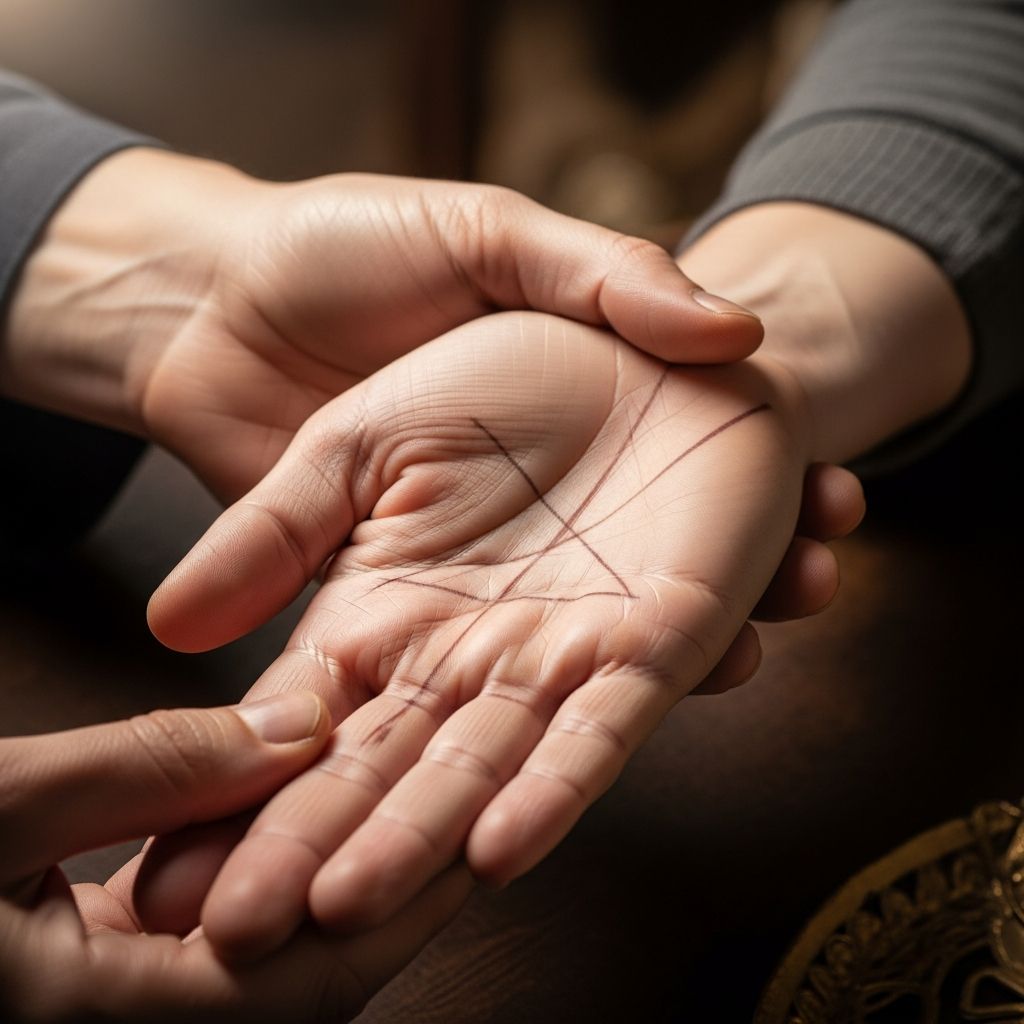
Throughout history, humans have sought ways to understand themselves and others more deeply. One ancient practice that continues to fascinate people across cultures is the art of reading hands. Known as palmistry, this interpretive tradition examines the physical characteristics and line patterns on your palms to unveil insights about your personality, emotional landscape, and life direction. Whether you approach it as a spiritual practice or a tool for self-reflection, palmistry offers a unique framework for understanding the intricate tapestry of human nature.
Understanding the Foundation: Hand Types and Their Meanings
The journey into palmistry begins with identifying your hand type, as this foundational characteristic influences how all other features should be interpreted. Your hand’s overall shape and proportions create a baseline for understanding your core personality orientation and how you naturally approach life’s challenges and opportunities.
The Four Primary Hand Categories
Palmistry traditionally categorizes hands into four types, each connected to elemental properties that shape personality expression:
| Hand Type | Physical Characteristics | Personality Indicators |
|---|---|---|
| Fire | Square or rectangular palm, shorter fingers, warm or flushed skin tone | Action-oriented, enthusiastic, spontaneous, sometimes impulsive |
| Water | Long and narrow palm, longer fingers, often delicate appearance | Emotionally intuitive, creative, compassionate, introspective |
| Earth | Square palm, short fingers, practical appearance | Reliable, grounded, practical, values stability |
| Air | Square or rectangular palm, longer fingers, intellectual appearance | Curious, analytical, communicative, intellectually driven |
Fire hands represent individuals who thrive on movement and challenge. These people are typically extroverted, driven by passion, and ready to take risks. Water hands, by contrast, belong to those who navigate the world through emotional awareness and creative expression. Earth hands indicate practical thinkers who prefer tangible results, while Air hands characterize intellectuals who seek knowledge and meaningful dialogue.
Deciphering the Major Lines: Windows Into Your Psyche
Beyond hand type, the major lines etched across your palm tell stories about different dimensions of your life. Each line carries distinct meaning, and variations in appearance provide nuanced information about how you experience and express yourself.
The Life Line: Vitality and Life Direction
Contrary to popular misconception, the life line does not predict lifespan but rather represents your vitality, resilience, and major life changes. A life line that curves widely around the Mount of Venus suggests emotional depth and strong connections to others. When the life line runs close to the thumb, it may indicate a more cautious approach to life experiences. A line that is clearly separated from the head line at its origin demonstrates enthusiasm for independence and adventure, suggesting someone comfortable taking bold steps without excessive deliberation.
The Heart Line: Emotional Expression and Relationships
Your heart line begins at the edge of your palm beneath your pinky finger and reveals how you experience, express, and navigate emotional relationships. The qualities and trajectory of this line provide significant insight into your romantic patterns and emotional stability.
A long and gracefully curved heart line indicates someone who openly expresses feelings and thoughts with ease. If your heart line runs straight and parallel to your head line, you maintain excellent emotional control and present a calm, approachable demeanor to the world. A line that curves upward toward your fingers suggests natural eloquence in discussing matters of the heart and emotional connection. Conversely, a downward curve may suggest difficulty articulating feelings or a more reserved emotional nature.
Islands or circles on the heart line mark periods of emotional difficulty or heartache, while a chain-like appearance with multiple small circles indicates someone who is deeply sentimental and may experience multiple emotional entanglements. A heart line that touches your life line at its starting point suggests emotional sensitivity and the possibility of being hurt easily in romantic situations.
The Head Line: Intellectual Style and Decision-Making
Your head line reflects your learning approach, communication style, intellectual capacity, and how you process information and make decisions. This line typically extends from the inner edge of your palm beneath your index finger across toward your pinky side.
A medium-length head line that reaches approximately to your ring finger represents balanced thinking and strong intellectual potential. A wavy or scattered head line suggests someone with diverse interests but possibly a shorter attention span, jumping between multiple pursuits. When your head line features multiple branches or crosses, it may indicate an active, sometimes restless mind prone to overthinking.
If your head line and life line overlap significantly at their origin, you tend toward thoughtfulness and introversion, carefully considering situations before acting. Conversely, when these lines are far apart at the start, you likely demonstrate boldness, extroversion, and strong independence. A head line that curves steeply downward indicates pronounced creativity and imagination, though emotional influences may sway your thinking.
Minor Lines and Mounts: Adding Depth to the Portrait
While the three major lines form the core of palmistry reading, various minor lines and the fleshy mounds beneath each finger add layers of meaning and nuance to personality interpretation.
The Sun Line: Creative Expression and Success
When present, the Sun Line runs from the base of your palm upward toward your ring finger, representing your creative potential and capacity for recognition or success. A long, well-defined Sun Line suggests strong artistic inclinations and the potential for your talents to receive acknowledgment.
The Mounts: Energy Centers of Your Palm
Each mount—the fleshy areas beneath your fingers and at the edges of your palm—corresponds to different personality energies:
- Mount of Venus: Governs love, beauty, sensuality, and emotional expressiveness; a pronounced mount indicates warmth and capacity for deep connection
- Mount of Jupiter: Related to ambition, leadership, and spiritual seeking; a lotus marking here suggests ascetic or spiritual inclinations
- Mount of Saturn: Represents responsibility, discipline, and introspection; well-developed indicates a serious, thoughtful nature
- Mount of Apollo (Sun): Connected to creativity, optimism, and artistic expression; bulging indicates strong creative drive
- Mount of Mercury: Represents communication, intellect, and adaptability; well-formed suggests verbal facility and quick thinking
- Mount of Luna (Moon): Governs imagination, intuition, and emotional depth; pronounced indicates strong creative and intuitive abilities
- Mount of Mars: Represents courage, passion, and assertiveness; well-developed suggests confidence and willingness to face challenges
Finger Length and Shape: Behavioral Clues
The relative length of your fingers and their individual characteristics provide additional personality information. Long fingers generally indicate someone detail-oriented, analytical, and thoughtful about decisions. Short fingers, conversely, suggest an action-oriented person who makes decisions quickly and prefers tangible results over extensive deliberation.
Flexible fingers indicate adaptability and openness to new experiences, while rigid fingers suggest someone more set in their ways and resistant to change. The shape of fingertips—whether pointed, rounded, or squared—further refines personality understanding, with pointed tips suggesting idealism, rounded tips indicating balance, and squared tips representing practicality.
Distinctive Patterns and Markings: Personal Signatures
Beyond basic lines and mounts, specific markings add personalized meaning to palm interpretation:
- Whorls: Spiral patterns indicating strong individuality and independence; multiple whorls suggest a unique, original thinker
- Loops: Indicate flexibility and openness; different loop types connect to specific areas of openness (e.g., Loop of Leisure suggests appreciation for pleasure and relaxation)
- Crosses: On lines or mounts may indicate challenges, spiritual awakening, or significant life events depending on location
- Stars: Represent intensity and potential significance; near the head line may suggest wisdom, while on the line itself may indicate potential difficulties
- Triangles: Suggest harmony between different personality aspects or areas of life
- Fish markings: Often considered auspicious, indicating good fortune or spiritual awareness
Hand Dominance: Revealing Different Dimensions
An often-overlooked aspect of palmistry involves comparing your dominant hand with your non-dominant hand. Your dominant hand reflects your current personality, life path, and how you actively engage with the world. Your non-dominant hand reveals your innate traits, natural inclinations, and the emotional or intuitive foundation underlying your conscious personality. Comparing these hands reveals how you’ve developed, adapted, or transformed your natural tendencies through life experience.
Practical Application: Reading Your Own Hands
To begin exploring your own palm patterns, start with these steps:
- Identify your hand type: Examine your palm shape and finger length to determine whether you have Fire, Water, Earth, or Air characteristics
- Trace your major lines: Locate your life, heart, and head lines, noting their length, curvature, and any distinctive breaks or marks
- Examine your mounts: Feel the fleshy areas beneath each finger to determine which are most pronounced
- Compare both hands: Notice differences between your dominant and non-dominant hands to understand your natural versus developed traits
- Observe skin texture: Fine, smooth skin (associated with sensitivity and refinement) differs from coarser skin (suggesting practicality and action orientation)
- Look for distinctive markings: Note any crosses, stars, islands, or unusual patterns that add specificity to your reading
Integration and Self-Understanding
Palmistry functions most effectively not as a deterministic prediction tool but as a mirror for self-reflection. The features of your hands create a symbolic language that can help you recognize patterns in how you typically approach relationships, decisions, and challenges. By understanding these patterns, you gain opportunity to consciously work with your natural tendencies, developing strengths while addressing potential limitations.
Whether you view palmistry through a spiritual lens or simply as an interesting system of personality psychology, engaging with your hand’s features offers valuable insights into your unique nature and the specific gifts you bring to your relationships and endeavors.
References
- Personality Types in Palmistry: What Your Hands Reveal About You — Occult Sanctum. https://www.occultsanctum.com/personality-types-in-palmistry-what-your-hands-reveal-about-you/
- Palm Reading Guide: What The Lines On Your Hand Say About Your Personality — YourTango. https://www.yourtango.com/2017303298/palm-reading-guide-how-read-palms-and-understand-your-personality
- The Ultimate Guide to Palmistry: Understanding Palm Reading From First Principles — Crystal Grids. https://crystalgrids.net/blogs/news/the-ultimate-guide-to-palmistry-understanding-palm-reading-from-first-principles
- Did You Know: Finger Shape and Personality in Palmistry — Crystal Grids. https://crystalgrids.net/blogs/news/the-ultimate-guide-to-palmistry-understanding-palm-reading-from-first-principles
- The Complete Palm Reading Guide for Beginners — Cosmopolitan. https://www.cosmopolitan.com/lifestyle/a69043787/how-to-read-palms/
Similar Articles







Read full bio of Sneha Tete