
Palmistry Myths: 8 Debunked Insights For Clearer Hand Analysis
Discover the truth behind popular palm reading misconceptions and unlock genuine insights from hand analysis.
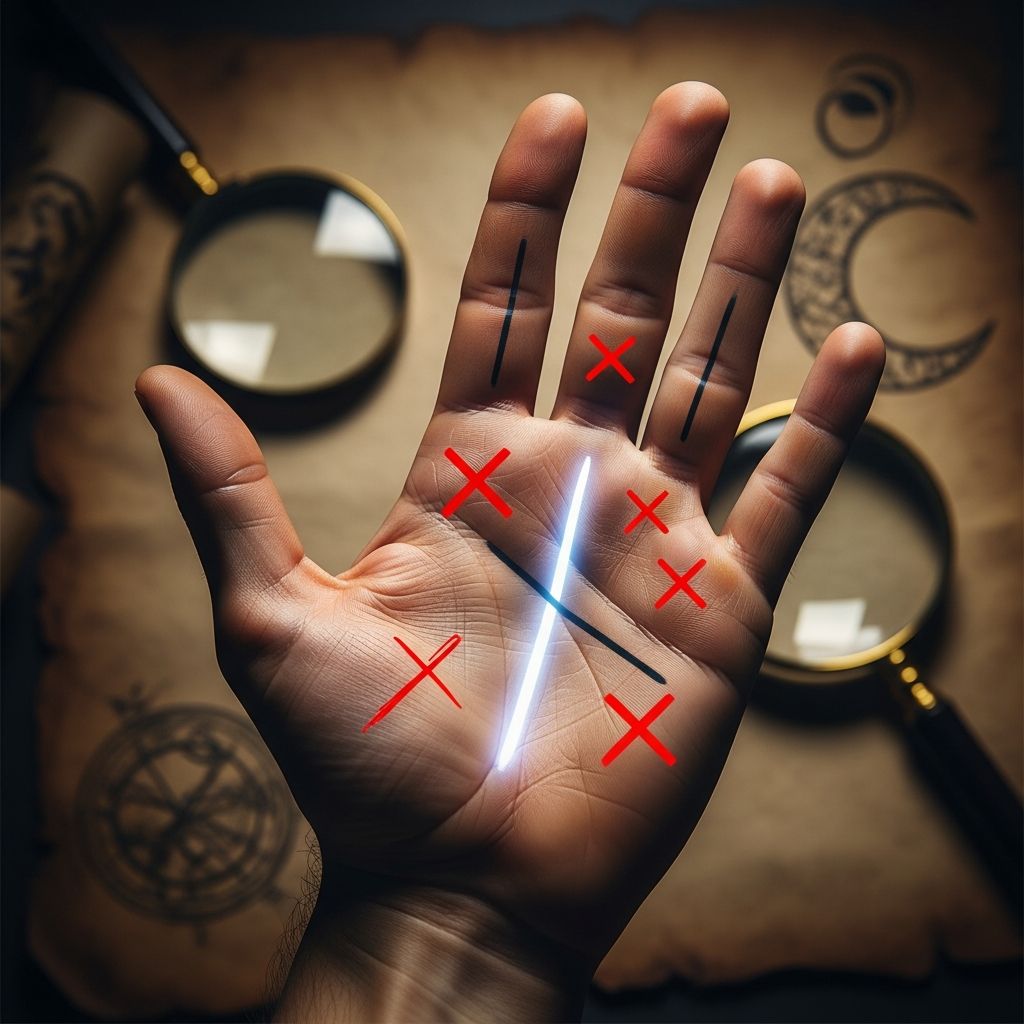
Palmistry, the ancient art of interpreting hand features, has captivated people for millennia. Originating from diverse cultures across Asia, Europe, and beyond, it examines lines, shapes, and mounts to reveal personality traits and life potentials. Yet, persistent misconceptions cloud its true essence, leading many to dismiss it as mere superstition or fortune-telling gimmick. This article dismantles key myths, drawing on historical context and practical realities to highlight palmistry’s role in personal insight.
The Origins and Evolution of Palmistry
Palmistry traces its roots to ancient civilizations, with evidence of practice in India, China, and Greece dating back thousands of years. Hindu texts reference it in spiritual contexts, while Greek philosophers like Aristotle noted hand shapes as indicators of character. Over time, it evolved into chiromancy, blending observation with intuition. Contrary to popular belief, it’s not a rigid science but a holistic interpretive tool that adapts to individual contexts.
Modern palmistry emphasizes dynamic readings, recognizing that hands reflect both innate potentials and life experiences. This evolution counters outdated views, positioning palmistry as a bridge between ancient wisdom and contemporary self-reflection.
Myth 1: Palm Lines Are Fixed and Unchanging
A widespread belief holds that palm lines remain static throughout life, serving as an unalterable blueprint of destiny. In truth, lines evolve with physical, emotional, and experiential changes. Major lines like the life, head, and heart lines may deepen or branch over time, mirroring shifts in health, mindset, or relationships.
For instance, stress can etch new worry lines, while healing experiences smooth others. This fluidity underscores palmistry’s focus on tendencies rather than absolutes, encouraging proactive life choices.
Myth 2: Palmistry Guarantees Precise Future Predictions
Many expect palmists to forecast exact events, like wedding dates or job promotions. However, palmistry maps probabilities and patterns, not certainties. It highlights strengths, challenges, and karmic influences, but free will alters outcomes.
- Life line suggests vitality trends, not lifespan.
- Heart line indicates emotional styles, not specific romances.
- Sun line points to success potentials, influenced by effort.
Ethical practitioners stress interpretation over prophecy, fostering empowerment over fatalism.
Myth 3: Only One Hand Holds All the Secrets
Novices often prioritize the dominant hand, assuming it alone reveals everything. Both hands matter: the non-dominant reflects inherited traits and subconscious potentials, while the dominant shows developed skills and choices.
| Hand Type | Represents | Key Insights |
|---|---|---|
| Non-Dominant | Innate qualities | Genetic predispositions, early environment |
| Dominant | Acquired traits | Life decisions, personal growth |
A balanced reading integrates both for comprehensive understanding.
Myth 4: Palmistry Reveals Exact Wealth or Career Paths
Claims of pinpointing riches or professions abound, but palms indicate aptitudes, not guarantees. Wealth lines suggest financial attitudes or opportunities, relative to one’s values and actions.
Career insights stem from finger shapes and mounts: long Mercury fingers hint at communication skills, strong Jupiter mounts at leadership. Success depends on external factors like education and timing.
Myth 5: Hands Disclose Lifespan or Specific Illnesses
The life line is notoriously misread as a death predictor. It actually gauges life energy, resilience, and major vitality shifts, not precise longevity.
Health clues, like island chains on lines, suggest stress periods but never diagnose diseases. Palmistry complements, not replaces, medical advice—misusing it for health predictions is unethical and risky.
Myth 6: Palm Reading Identifies Names, Races, or Genders Precisely
No credible palmist claims to divine personal identities from hands alone. Gender differences exist—masculine hands often feature thicker palms and straighter fingers—but ethnicity or names evade palm features.
These myths stem from sensationalism; true analysis focuses on universal markers like line clarity and mount prominence.
The Role of Hand Shape and Finger Lengths
Beyond lines, hand types classify personalities: earthy square palms denote practicality, airy long ones creativity. Finger lengths refine this—index-dominant hands signal ambition, pinky-strong ones adaptability.
- Elementary hands: Robust, practical workers.
- Conic hands: Intuitive, artistic souls.
- Spatulate hands: Energetic innovators.
- Pointed hands: Idealistic dreamers.
These classifications, rooted in traditional systems, provide personality frameworks without deterministic overreach.
Myth 7: Palmistry Is Pure Superstition Without Cultural Depth
Skeptics label it pseudoscience, ignoring its anthropological value. Palmistry thrives in Hindu astrology, Chinese medicine, and Romani traditions, symbolizing humanity’s quest for self-knowledge.
While unproven empirically, its endurance across eras affirms psychological utility, akin to personality typing tools.
Ethical Palmistry: Beyond Entertainment
Often reduced to party tricks, serious palmistry demands training in anatomy, psychology, and ethics. Practitioners avoid fear-mongering, emphasizing empowerment and context.
Self-reading empowers individuals: trace your lines, note changes, correlate with life events for personal growth.
Myth 8: It’s Gender-Specific or Biased
Archaic texts linked features to genders, but modern views reject this. Hands are unique; interpretations ignore stereotypes, focusing on holistic patterns.
Modern Relevance in a Skeptical World
Despite tech advances, palmistry persists via apps and workshops, aiding mindfulness. It fosters reflection, much like journaling or therapy.
Frequently Asked Questions (FAQs)
Can palmistry really change my life?
It offers insights for informed decisions, but action drives change.
Is palm reading scientifically valid?
No empirical proof exists, but it holds cultural and psychological value.
How often should I check my palms?
Periodically, during life transitions, to track evolutions.
What’s the best hand to read first?
Start with non-dominant for potentials, then dominant for realities.
Can anyone learn palmistry?
Yes, with study of basics like lines, mounts, and shapes.
Conclusion: Embracing Palmistry’s True Power
Palmistry shines as a tool for self-discovery, not divination. By debunking myths, we reclaim its essence: guiding reflection amid life’s uncertainties. Explore your hands today—discover patterns that illuminate your path.
References
- 13 Myths About Palmistry Exposed by an Online Psychic — Jahben. Accessed 2026. https://jahben.com/13-myths-about-palmistry-exposed-by-an-online-psychic/
- Palmistry Myths and Misconceptions: Separating Fact from Fiction — Astrotalk. Accessed 2026. https://astrotalk.com/astrology-blog/palmistry-myths-and-misconceptions-separating-fact-from-fiction-insideastro-iabo7/
- Palmistry Myths | What Your Hands Really Reveals — YouTube (Gautam Kamboj). 2025-09-24. https://www.youtube.com/watch?v=vFL6VzB-GKY
- Confessions of a Palmist — The Harvard Crimson. 1968-01-10. https://www.thecrimson.com/article/1968/1/10/confessions-of-a-palmist-pithe-name/
- The Accuracy Of Palm Reading: Fact Or Fiction? — Palmistry.devroqapps. Accessed 2026. https://palmistry.devroqapps.com/blog/palm-reading/hand-analysis/the-accuracy-of-palm-reading
Similar Articles








Read full bio of medha deb