Lunar Phases: 8 Practical Ways To Boost Personal Growth
Align your goals and intentions with the Moon's natural rhythms
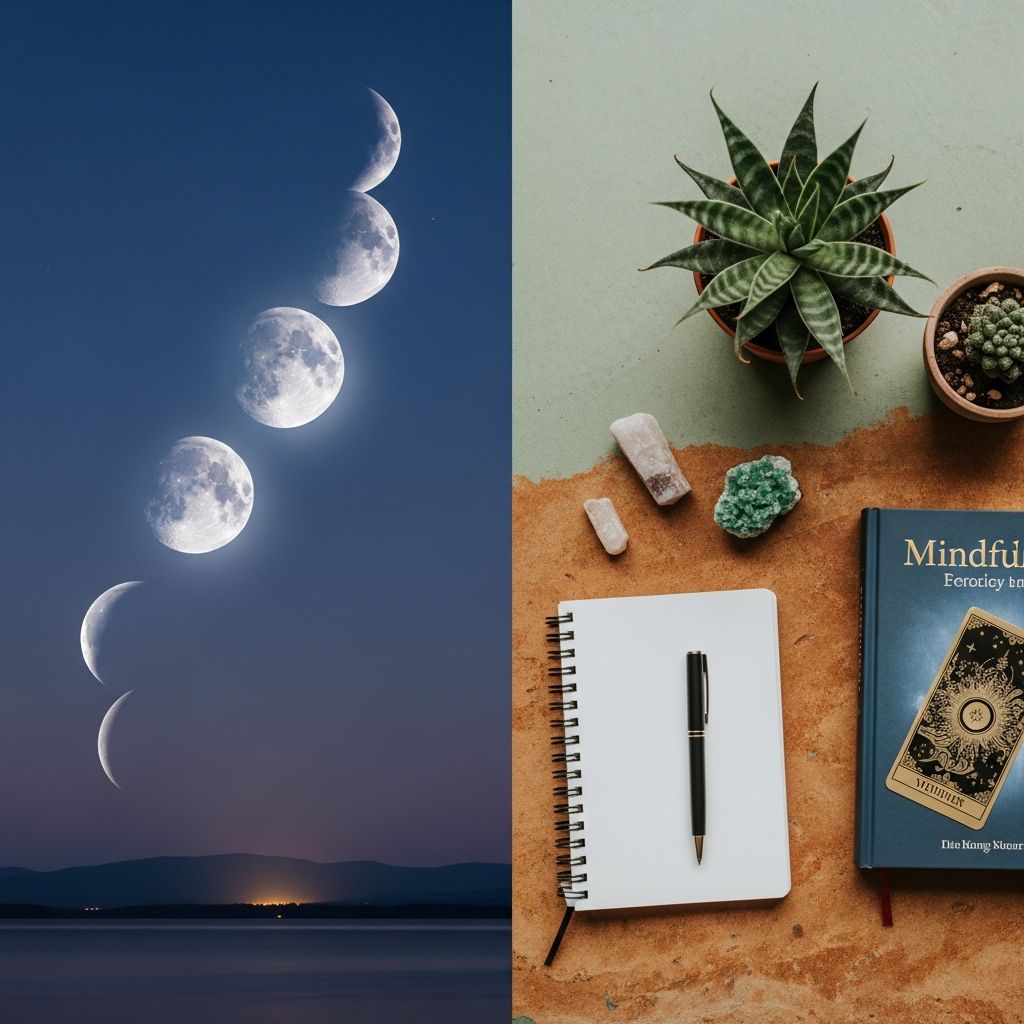
The Moon completes a full cycle roughly every 29.5 days, moving through eight distinct phases that have captivated human consciousness for millennia. While the Moon’s gravitational influence shapes tides and ocean currents, many individuals find value in aligning their personal endeavors with these natural celestial patterns. Understanding the characteristics of each lunar phase can provide a framework for planning activities, setting intentions, and tracking progress throughout the month.
The Structure of the Lunar Month
The lunar cycle, also called a synodic month, spans approximately 29.5 days and consists of eight recognizable phases. These phases occur in a continuous sequence: new moon, waxing crescent, first quarter, waxing gibbous, full moon, waning gibbous, third (last) quarter, and waning crescent. Each primary phase—new moon, first quarter, full moon, and third quarter—marks a specific geometric relationship between the Sun, Moon, and Earth.
The intermediate phases (the two crescent and two gibbous phases) each last approximately seven days and represent the gradual transitions between primary phases. This natural division creates natural windows for different types of activities and reflection practices.
Beginning Your Month: Activities During the New Moon Phase
The new moon represents the beginning of a fresh lunar cycle and occurs when the Moon sits between Earth and the Sun, making it invisible from our perspective. This phase symbolizes new beginnings and potential, making it an ideal time for certain intentional practices.
Suitable activities during the new moon include:
- Setting goals and intentions for the upcoming month
- Brainstorming new projects or initiatives
- Planning major life changes or transitions
- Journaling about desires and aspirations
- Researching opportunities aligned with your objectives
- Meditation focused on clarifying your vision
- Creating vision boards or written declarations
The new moon phase typically lasts just hours as a precise astronomical event, though the energy of new beginnings extends throughout the waxing crescent phase that follows. Use this window to plant seeds—both literal and metaphorical—for what you wish to cultivate during the month ahead.
Building Momentum: The Waxing Crescent Through First Quarter
Following the new moon, the Moon enters the waxing crescent phase, during which the illuminated portion grows from zero to fifty percent. This phase represents the initial growth period of the lunar cycle and typically spans about seven days.
During this period, the Moon’s increasing visibility mirrors the building of momentum. This is an optimal time for:
- Taking initial action steps toward your goals
- Building new habits or routines
- Gathering resources needed for your projects
- Having conversations that move plans forward
- Attending workshops, classes, or training sessions
- Networking and making new professional connections
- Beginning exercise routines or wellness practices
The first quarter moon arrives approximately one week after the new moon. At this point, the Moon appears as a half moon with fifty percent illumination. This primary phase often brings a sense of challenge or decision point—a moment to assess whether your early actions align with your intentions.
Activities during the first quarter phase:
- Reviewing progress made so far
- Making adjustments to your approach if needed
- Problem-solving obstacles that have emerged
- Recommitting to your goals with renewed clarity
- Celebrating small victories and milestones
Peak Energy: The Waxing Gibbous and Full Moon
The waxing gibbous phase occurs between the first quarter and full moon, during which the Moon is more than fifty percent illuminated but not yet fully lit. This phase represents increasing energy and momentum, lasting approximately seven days.
The waxing gibbous is ideal for:
- Intensifying efforts on your primary projects
- Public-facing activities and presentations
- Seeking visibility for your work or accomplishments
- Hosting events or gatherings
- Making important announcements
- Engaging in collaborative work
- Pushing toward completion of significant milestones
The full moon arrives roughly two weeks after the new moon and represents the peak of the lunar cycle. At this phase, the Moon appears completely illuminated as Earth positions itself between the Sun and Moon. The full moon is associated with culmination, revelation, and energy at its highest point.
The full moon phase is particularly suitable for:
- Completing major projects or phases of work
- Achieving important goals or milestones
- Releasing what no longer serves you
- Celebrating accomplishments and success
- Hosting meaningful gatherings or ceremonies
- Gaining clarity about situations or decisions
- Reflecting on lessons learned during the cycle
- Expressing gratitude and appreciation
Transitioning to Release: The Waning Gibbous Through Third Quarter
After the full moon’s peak, the lunar cycle enters its second half, beginning with the waning gibbous phase. During this approximately seven-day period, the Moon’s illumination decreases from one hundred percent to fifty percent. The energy shifts from expansion to consolidation and refinement.
Activities during the waning gibbous phase:
- Fine-tuning work that’s nearing completion
- Editing, revising, and perfecting projects
- Organizing and systematizing processes
- Sharing finished work or results with others
- Documenting lessons and insights gained
- Planning how to build upon current success
The third quarter moon (also called the last quarter) appears as a half moon approximately twenty-one days into the cycle. At this point, the opposite half of the Moon is illuminated compared to the first quarter, representing a turning inward and reassessment.
The third quarter is optimal for:
- Deep reflection on the month’s experiences
- Evaluating what worked and what didn’t
- Releasing habits or patterns that hindered progress
- Forgiving yourself and others
- Identifying patterns and themes
- Preparing for the next cycle’s new intentions
- Simplifying and eliminating excess
Completion and Rest: The Waning Crescent Phase
The final phase of the lunar cycle is the waning crescent, which lasts approximately seven days before returning to the new moon. During this period, the Moon’s visible illumination decreases from fifty percent toward zero. This phase represents completion, rest, and integration.
The waning crescent is an excellent time for:
- Rest, recovery, and gentle activity
- Meditation and spiritual practice
- Journaling and introspection
- Completing final tasks and loose ends
- Spending quiet time in nature
- Sleeping more and honoring your body’s need for rest
- Reviewing the entire month’s journey
- Preparing mentally for the fresh start ahead
Comparing Moon Phases and Recommended Activities
| Moon Phase | Illumination | Duration | Primary Activity Focus |
|---|---|---|---|
| New Moon | 0% | Hours | Intention-setting and planning |
| Waxing Crescent | 0-50% | ~7 days | Initial action and momentum-building |
| First Quarter | 50% | Hours | Assessment and adjustment |
| Waxing Gibbous | 50-100% | ~7 days | Intensified effort and visibility |
| Full Moon | 100% | Hours | Culmination and celebration |
| Waning Gibbous | 100-50% | ~7 days | Refinement and completion |
| Third Quarter | 50% | Hours | Release and evaluation |
| Waning Crescent | 50-0% | ~7 days | Rest and integration |
Practical Implementation Strategies
To effectively use lunar phases in your personal development, consider these approaches:
Track the Moon: Use a lunar calendar or Moon-tracking app to know which phase you’re in throughout the month. Awareness of the current phase helps you align activities naturally.
Monthly Planning Ritual: On or near the new moon, set aside time for intentional planning. Write down your goals, desired outcomes, and areas where you want to focus energy during the coming cycle.
Weekly Check-ins: As the Moon moves through different phases, take brief moments to reflect on your progress and adjust as needed. The quarter phases naturally invite pause points.
Flexible Application: While lunar phases provide a helpful framework, life circumstances and deadlines may not always align perfectly. Use these phases as gentle guidance rather than rigid rules.
Personal Customization: Experiment to discover which activities resonate most with you during each phase. Your relationship with the lunar cycle is uniquely personal.
Frequently Asked Questions
How long is the complete lunar cycle?
The complete lunar cycle, from one new moon to the next, takes approximately 29.5 days. This is called a synodic month and is distinct from the sidereal month (the time it takes the Moon to orbit Earth), which is about 27.3 days.
Can I see the new moon?
No, the new moon is invisible because the illuminated side of the Moon faces away from Earth, toward the Sun. This is why the new moon represents a fresh beginning—it’s a moment of emptiness and potential before the Moon’s illumination begins to grow.
Do moon phases occur at the same time everywhere on Earth?
Yes, all moon phases occur at the same time regardless of where on Earth you observe from. The geometric relationship between the Sun, Moon, and Earth is the same everywhere.
What’s the difference between the first and third quarter moons?
Both appear as half moons with 50% illumination. The difference is the which half is illuminated. In the first quarter, the right half is illuminated (in the Northern Hemisphere), while in the third quarter, the left half is illuminated. They also represent different points in the lunar cycle’s energy—first quarter is about action and challenge, while third quarter is about release and reflection.
Can I use the lunar cycle if I live in the Southern Hemisphere?
Absolutely. The lunar cycle works the same everywhere, though the visual appearance of crescents appears on opposite sides (left instead of right, for example). The underlying lunar energetics remain consistent regardless of hemisphere.
Conclusion: Working With Natural Rhythms
The Moon’s monthly cycle provides a natural framework that has guided human activity for thousands of years. By aligning your goals, projects, and personal practices with lunar phases, you create a sustainable rhythm that works with natural forces rather than against them. Whether you view this as astronomical alignment or metaphorical resonance, the structure of the lunar month offers a practical system for organizing effort, celebrating achievement, and allowing necessary rest. Experiment with these suggestions, observe your own responses, and develop a personal lunar practice that supports your growth and well-being.
References
- Moon Phases — NASA Science. 2024. https://science.nasa.gov/moon/moon-phases/
- Phases of the Moon and Percent of the Moon Illuminated — U.S. Naval Observatory. Accessed 2024. https://aa.usno.navy.mil/faq/moon_phases
- Understanding Moon Phases: The 8 Stages — AstroBackyard. 2024. https://astrobackyard.com/moon-phases/
- What Are the Moon’s Phases? — NASA Space Place. 2024. https://spaceplace.nasa.gov/moon-phases/
- Sky Tellers – Moon Phases — Lunar and Planetary Institute (LPI). Accessed 2024. https://www.lpi.usra.edu/education/skytellers/moon-phases/
- The Phases of the Moon Explained — The Planetary Society. 2024. https://www.planetary.org/articles/the-phases-of-the-moon-explained
Similar Articles






Read full bio of medha deb