Gandmool Nakshatra Puja Guide: Step-By-Step Shanti Rituals
Discover the significance of Gandmool Nakshatras and how dedicated puja rituals can neutralize their challenging influences for prosperity and peace.
In Vedic astrology, certain lunar positions at birth can introduce unique energetic challenges known as Gandmool Nakshatra dosha. This phenomenon occurs when the Moon transits specific Nakshatras positioned at zodiacal junctions, potentially affecting health, prosperity, and family well-being. Performing targeted puja rituals offers a time-honored method to harmonize these influences, fostering balance and positive outcomes.
Understanding Gandmool Nakshatras in Depth
Gandmool Nakshatras represent critical points where fiery and watery zodiac signs meet, creating transitional zones of intense cosmic energy. The term derives from Sanskrit roots indicating a ‘knot at the root,’ symbolizing potential instability that may manifest as obstacles if unaddressed. These Nakshatras are governed by Mercury and Ketu, planets associated with intellect, transformation, and karmic shifts.
While traditionally viewed as inauspicious, their effects vary based on planetary placements and individual horoscopes. Benefic influences from Mercury or Ketu can mitigate negatives, turning challenges into opportunities for growth.
The Six Key Gandmool Nakshatras
Out of 27 Nakshatras, six are classified as Gandmool due to their rulers and positions:
- Ashwini: Ketu-ruled in Aries, linked to rapid changes and healing energies.
- Ashlesha: Mercury-ruled in Cancer, influencing emotional depths and intuition.
- Magha: Ketu-ruled in Leo, connected to ancestral legacies and authority.
- Jyeshtha: Mercury-ruled in Scorpio, associated with resilience and hidden strengths.
- Moola: Ketu-ruled in Sagittarius, symbolizing root-level transformations.
- Revati: Mercury-ruled in Pisces, fostering compassion and spiritual journeys.
Birth under these during the Moon’s transit triggers dosha considerations.
Potential Impacts of Gandmool Dosha
The dosha’s effects unfold over specific periods, often impacting the native or relatives. Traditional texts outline phase-specific consequences:
| Nakshatra | Phase 1 | Phase 2/3 | Phase 4 |
|---|---|---|---|
| Ashwini/Ashlesha | Auspicious for native | Wealth loss | Father’s hardships |
| Magha | Elder brother’s troubles | Younger brother’s issues | Mother/wealth concerns |
| Others (Jyeshtha, Moola, Revati) | Family disruptions | Health/financial obstacles | General instability |
These may include health setbacks, financial hurdles, career delays, or relational strains, though strong charts can lessen severity.
Why Gandmool Nakshatras Warrant Special Attention
At sign junctions, these Nakshatras blend opposing elements—fire and water—leading to volatile energies that disrupt stability. Ketu’s transformative force encourages detachment, while Mercury sharpens intellect amid restlessness. Far from purely negative, they catalyze personal evolution, innovation, and spiritual awakening when properly managed.
Without remedies, the initial 27 days post-birth are critical, as Arishta Yoga may activate, bringing suffering in designated life years.
Shanti Puja: The Core Remedial Ritual
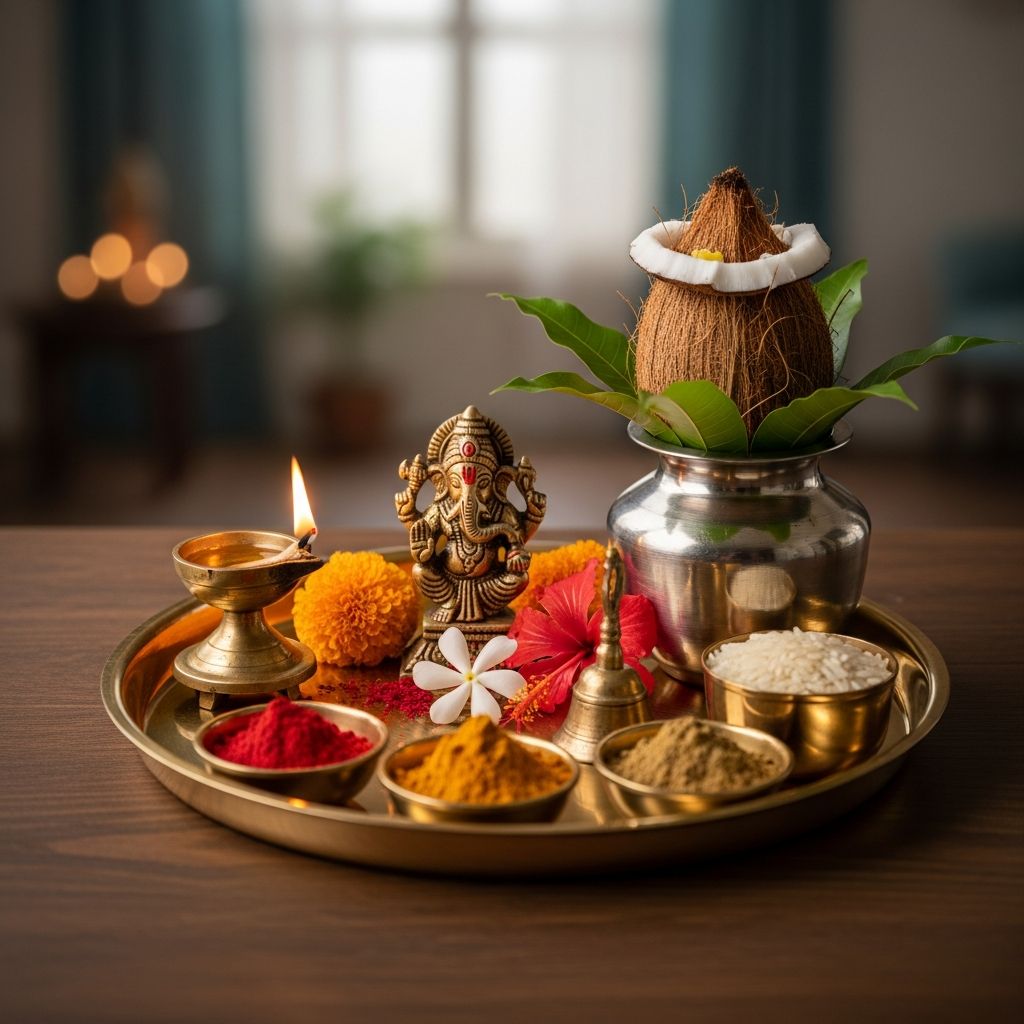
Gandmool Shanti Puja neutralizes dosha by invoking divine grace through Vedic chants, offerings, and homas. Ideally performed on the 27th day after birth—or later if delayed—it purifies the native’s aura and ancestral lines.
Preparation Steps for Puja
- Consult a qualified astrologer for exact Muhurta using birth details.
- Gather items: idols of Lord Ganesha, Shiva, specific Nakshatra deities, herbs, fruits, and sacred threads.
- Select a clean, northeast-facing venue with Kalash installation.
Puja Vidhi: Step-by-Step Process
- Sankalpa: Declare intent for dosha pacification.
- Ganapati Puja: Invoke remover of obstacles.
- Nakshatra Devata Homam: Fire offerings to ruling deity (e.g., Ashwini Kumaras for Ashwini).
- Mahamrityunjaya Japa: 1.25 lakh recitations for protection.
- Pinda Daana: Ancestral appeasement.
- Havan and Aarti: Conclude with collective prayers.
The ritual spans 4-6 hours, involving priests versed in Yajurveda.
Timing and Variations in Puja Performance
Primary timing aligns with the child’s 27th day, but alternatives exist:
- Infancy: 27th day or next auspicious Tithi.
- Childhood/Adulthood: During Mercury/Ketu dashas or Shanti years (e.g., 27th, 28th).
- Marriage: Pre-wedding for harmony.
Annual renewals enhance ongoing protection.
Benefits of Timely Gandmool Shanti Puja
Participants report:
- Improved health and vitality.
- Financial stability and career growth.
- Harmonious family relations.
- Spiritual clarity and obstacle reduction.
These stem from karmic realignment and positive planetary appeasement.
Common Misconceptions About Gandmool Dosha
- Myth: Always catastrophic – Reality: Depends on full chart; benefics yield positives.
- Myth: Only affects newborns – Reality: Influences lifecycle phases.
- Myth: Irremediable – Reality: Puja effectively mitigates.
Integrating Puja with Daily Practices
Complement rituals with:
- Daily Mercury/Ketu mantras.
- Gemstones like emerald (Mercury) or cat’s eye (Ketu), post-consultation.
- Charity to orphans or temples on Wednesdays/Saturdays.
- Fasting on Ekadashi for purification.
FAQs on Gandmool Nakshatra Puja
Q: How do I check for Gandmool in my chart?
A: Use birth date, time, place via Panchang software or astrologer; Moon in listed Nakshatras confirms.
Q: Can puja be done online/remotely?
A: Yes, many services offer priest-led virtual pujas with sankalpa on your behalf.
Q: What if puja is missed in infancy?
A: Perform later during vulnerable dashas; effects lessen with age.
Q: Are all Gandmool effects negative?
A: No, they bring transformative potential for success in spirituality, research, healing.
Q: Cost of Shanti Puja?
A: Varies by location/priest; typically includes materials, donations.
Choosing a Reliable Astrologer for Puja
Seek experts with Vedic lineage, positive testimonials, and transparent processes. Verify Muhurta accuracy and ritual completeness for optimal results.
References
- Gandmool Nakshatras in Vedic Astrology – Effects and Remedies — Astroshastra. Accessed 2026. https://www.astroshastra.com/articles/gandmools.php
- Check Gand Mool Nakshatra & Understanding Its Effects — Askganesha. Accessed 2026. https://www.askganesha.com/articles/gand-mool-nakshatra
- Astrological Insights into Ganda Mool Nakshatras — Ask Ayurveda. Accessed 2026. https://ask-ayurveda.com/articles/726-gandmool-meaning–astrological-insights-into-ganda-mool-nakshatras
- What is Gand Mool Nakshatra and its Significance? — Astro Ambe. Accessed 2026. https://astroambe.com/blog/gand-mool-nakshatra
- What Is Gandmool Nakshatra? Meaning, Dosha & Remedies — Astroswamig. Accessed 2026. https://www.astroswamig.com/articles/gandmool-nakshatra
- What is Gandmool Dasha — Astrodaily. Accessed 2026. https://astrodaily.com/cmspage.aspx?pgid=6&spgid=96
- Gand Mool Nakshatra Shanti Puja: Complete Guide 2026 — BookMyPoojaOnline. 2026. https://bookmypoojaonline.com/blogs/gand-mool-nakshatra-shanti-puja-complete-guide
Similar Articles








Read full bio of Sneha Tete