Divination Methods That Complement Astrology: Comprehensive Guide
Discover powerful divination techniques that work alongside astrological insights for deeper spiritual guidance.
The intersection of astrology and divination represents a rich tapestry of spiritual practices designed to illuminate the unknown and provide clarity during moments of uncertainty. While astrology focuses on interpreting celestial movements and their influence on human affairs, divination tools serve as gateways to deeper intuitive understanding. When combined thoughtfully, these practices create a multifaceted approach to self-discovery and personal guidance.
Understanding Divination in Context with Astrology
Divination, at its core, represents the practice of seeking knowledge through non-conventional means. Rather than simply predicting the future, modern divination emphasizes illuminating present circumstances and revealing underlying energies that shape current situations. This perspective aligns seamlessly with astrology’s goal of understanding personal patterns and life trajectories.
The relationship between astrology and divination tools creates a synergistic partnership. Astrology provides the structural framework—understanding planetary influences, birth charts, and cosmic cycles—while divination tools offer immediate, intuitive access to guidance that complements this celestial knowledge. Many practitioners find that combining these approaches yields richer insights than using either method alone.
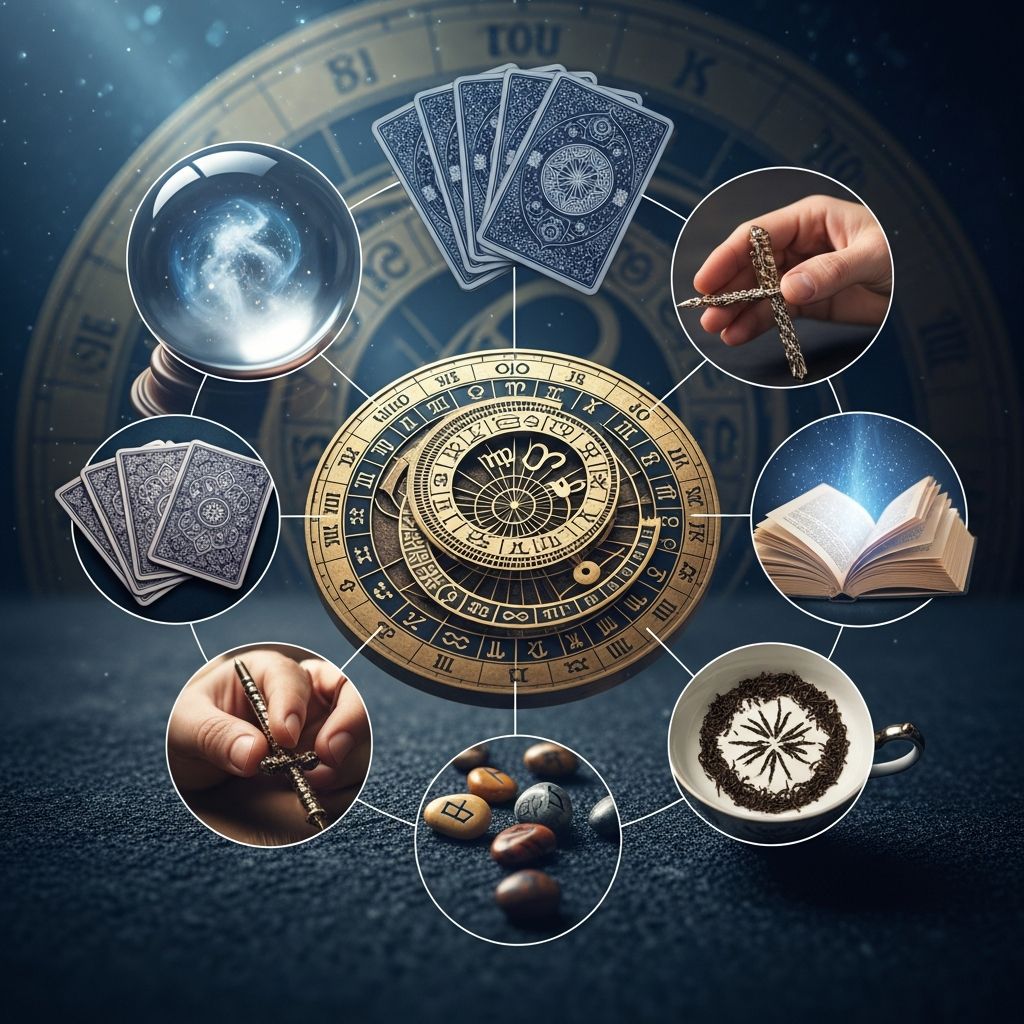
The variety of available divination methods is extensive. From card-based systems to natural elements, practitioners can select tools that resonate with their intuitive strengths and spiritual preferences. Understanding how different tools function allows individuals to build a personalized spiritual practice that aligns with their unique needs and personality.
Card-Based Systems: Navigating Complexity and Symbolism
Tarot Decks and Their Structure
Tarot remains one of the most recognized divination systems globally. A complete tarot deck consists of 78 cards organized into two primary sections that work together to provide comprehensive readings.
The structure divides into the Major Arcana—comprising 22 cards that represent significant life themes, archetypal lessons, and transformational moments—and the Minor Arcana, which contains 56 cards organized into four suits similar to conventional playing cards. This organizational framework allows practitioners to interpret readings at multiple levels of meaning and complexity.
Tarot readings function best when the practitioner approaches them with specific questions or focuses. The complexity of tarot suits and symbolic meanings requires study and practice, making it ideal for individuals who appreciate depth and detailed self-reflection. Many astrologers incorporate tarot readings alongside natal chart analysis to provide clients with multifaceted guidance.
Oracle Cards: Accessibility and Intuitive Flow
Oracle cards offer a more streamlined alternative to traditional tarot systems. These decks typically contain fewer cards than tarot, with each card usually featuring a word, phrase, or image that communicates its message directly.
The flexibility of oracle cards makes them particularly valuable for beginners and for practitioners seeking quick insights. Since oracle card meanings vary by deck rather than following standardized symbolism, readings rely more heavily on intuitive interpretation and personal connection. This characteristic makes them excellent for daily guidance or when rapid clarity is needed.
Many practitioners use oracle cards alongside astrology to receive supplementary messages aligned with current planetary transits or natal chart placements. The gentler, more intuitive nature of oracle readings can soften more challenging astrological interpretations.
Energy-Sensitive Divination Tools
Pendulum Divination: Simple Yet Profound
Pendulum divination represents one of the most accessible entry points for beginners. A pendulum typically consists of a small weight—often crystal, stone, or other material—suspended from a chain or string.
The mechanics of pendulum work rely on subtle energetic responses. Practitioners establish predetermined directional meanings—such as back-and-forth swings for affirmative responses and side-to-side movements for negative ones. Many users employ pendulum mats marked with response areas to enhance clarity when interpreting movements.
Pendulum divination excels at providing quick yes-or-no answers to specific questions. This tool works most effectively when the practitioner remains emotionally neutral about the outcome, as personal attachment to particular answers can interfere with accurate readings. Many astrologers recommend using pendulums to confirm oracle or tarot pulls or to locate energetic blockages and subconscious patterns.
Dowsing: Ancient Practice, Modern Applications
Dowsing represents one of the oldest divination methods, with historical roots in locating water sources and hidden resources. Modern practitioners have expanded dowsing applications beyond locating physical objects to include spiritual guidance and decision-making support.
Traditional dowsing tools include Y-shaped or L-shaped rods, typically fashioned from metal or wood, though pendulums also function effectively for dowsing purposes. Contemporary dowsers believe that anyone can develop this skill through consistent practice and cultivating receptiveness to subtle energetic signals.
Scrying and Reflective Divination
Scrying encompasses divination methods involving sustained gazing into reflective surfaces to receive psychic impressions and intuitive messages. This ancient practice appears across numerous cultures throughout history, making it one of humanity’s oldest spiritual techniques.
Common scrying surfaces include crystal balls, mirrors, water, and reflective stones. The practice works through focused attention and receptive consciousness, allowing practitioners to access deeper intuitive layers. Some individuals experience symbolic visions or impressions when scrying, while others report feelings, knowing, or emotional responses to their questions.
Scrying complements astrology particularly well during significant planetary events or transit periods. Many practitioners use scrying during full moons or during transits of personal planets to gain visual or impressionistic guidance about upcoming influences.
Runes and Symbol-Based Systems
Rune divination represents another symbol-based approach that functions alongside astrology. These ancient symbols carry layered meanings and archetypal significance that practitioners learn and interpret through study and intuitive work.
Like tarot, rune casting requires foundational knowledge of individual rune meanings, historical context, and interpretive frameworks. However, runes often provide more concise, direct messages compared to the elaborate symbolism of tarot cards. Many practitioners appreciate runes for their simplicity and the clarity they provide when addressing specific questions or challenges.
Natural Element Divination Methods
Tea Leaf Reading
Tea leaf reading, also called tasseomancy, represents a form of divination utilizing natural elements and pattern interpretation. Practitioners examine the arrangement of dried tea leaves remaining in cups or vessels after tea consumption, interpreting their patterns and positions as meaningful messages.
This method relies heavily on symbol interpretation and intuitive recognition of patterns. Many individuals appreciate tea leaf reading for its meditative quality and the accessibility of the required materials. The practice carries cultural significance in numerous traditions worldwide.
Additional Natural Element Methods
Divination traditions incorporate numerous other natural elements and materials. Carromancy—the reading of melted and hardened wax patterns—creates visual symbols open to interpretation. Bone divination, known as osteomancy, uses bone patterns or thrown bones to generate messages. These methods emphasize the practitioner’s intuitive capacity to recognize meaningful patterns and symbolism within natural materials.
Selecting the Right Divination Tools for Your Practice
Assessment Framework
Choosing appropriate divination tools requires honest self-assessment regarding personal preferences and spiritual objectives. The following considerations guide this selection process:
- Follow intuitive attraction—What tools generate excitement or curiosity? Genuine excitement often indicates natural compatibility with particular methods
- Match your needs—Different tools serve different purposes; tarot and oracle cards provide detailed reflection, pendulums offer quick clarity, while meditation and dream work facilitate deep self-connection
- Consider learning investment—Some tools require substantial study, while others offer immediate usability
- Assess available time—Quick divination methods differ from those requiring extended practice sessions
- Evaluate emotional neutrality—Tools requiring emotional detachment may work better for individuals comfortable with objective observation
Building a Balanced Practice
Rather than limiting practice to a single tool, many practitioners benefit from developing familiarity with multiple methods. This diversified approach allows practitioners to select the most appropriate tool for specific questions or situations. An individual might use pendulums for quick yes-no decisions, oracle cards for daily guidance aligned with current astrological transits, and tarot for deeper exploration of life patterns during significant planetary cycles.
Integration with Astrological Practice
Complementary Application Strategies
Astrology and divination tools create powerful synergies when used intentionally together. A natal chart analysis can identify areas of life requiring deeper exploration, which divination tools can then illuminate through a different lens. Conversely, divination readings can raise questions that astrology helps contextualize within larger life patterns and timing frameworks.
During significant astrological transits—such as Saturn return, lunar nodes, or outer planet movements—divination tools provide real-time guidance about navigating these influences. This combination offers both structural understanding (astrology) and intuitive clarity (divination).
Quality and Intention
Both astrology and divination depend significantly on practitioner intention and openness. The most powerful readings occur when individuals approach these tools with genuine curiosity rather than seeking specific predetermined answers. Setting clear intentions before readings—whether astrological or divinatory—helps focus energy and generate more meaningful results.
Common Questions About Divination and Astrology
Frequently Asked Questions
- Can beginners effectively use divination tools?
- Yes, many divination tools—particularly pendulums and oracle cards—provide immediate accessibility for beginners. More complex systems like tarot require study but remain learnable for motivated practitioners.
- Do divination tools accurately predict the future?
- Modern practitioners typically view divination as illuminating present circumstances and current energetic patterns rather than providing definitive future predictions. This perspective emphasizes personal empowerment and agency in creating outcomes.
- Should I use multiple divination methods simultaneously?
- Using complementary tools can provide richer insights, though beginners may benefit from mastering one method before expanding their practice. Many experienced practitioners use multiple tools for confirmation and deeper understanding.
- How does astrology differ from divination?
- Astrology focuses on interpreting celestial positions and their influences, while divination encompasses various methods for accessing intuitive knowledge. These practices complement rather than compete with each other.
- What makes a divination tool effective?
- Effective divination depends on the practitioner’s intuitive connection, clear intentions, emotional neutrality regarding outcomes, and willingness to interpret messages meaningfully. The tool itself serves as a vehicle for accessing deeper knowing.
Developing Mastery and Deeper Connection
Building genuine skill with divination tools requires consistent practice and genuine engagement rather than casual curiosity. Individuals who develop deep relationships with specific tools report increasingly accurate and nuanced readings over time. This mastery develops through repeated practice, study of underlying systems and symbolism, and honest self-reflection about reading accuracy and personal growth.
The integration of astrology and divination creates a comprehensive spiritual practice supporting self-knowledge, decision-making clarity, and alignment with larger life patterns. Whether newly exploring these methods or deepening existing practices, individuals discover that diverse tools offer complementary pathways to the wisdom and guidance they seek.
References
- The Best Psychic Tools for Each Zodiac — California Psychics. https://www.californiapsychics.com/blog/astrology-numerology/best-psychic-tools-zodiac.html
- Exploring Popular Divination Methods: A Beginner’s Guide — Wicca Academy. https://wiccaacademy.com/exploring-popular-divination-methods-a-beginners-guide/
- Exploring Different Tools and Techniques: 10 Forms of Divination — Downtown Tarot. https://www.downtowntarot.com/post/exploring-different-tools-and-techniques-10-forms-of-divination
- 7 Powerful Divination Tools to Deepen Your Intuition — Jessica Dimas. https://jessicadimas.com/divination-tools/
- Methods of divination — Wikipedia. https://en.wikipedia.org/wiki/Methods_of_divination
- Divination – Occult Science — LibGuides at Monmouth University. https://guides.monmouth.edu/Occult/divination
Similar Articles






Read full bio of medha deb