
Clairaudience: Expert Guide To Psychic Hearing And Development
Explore the nature of clairaudient perception and spiritual communication through sound
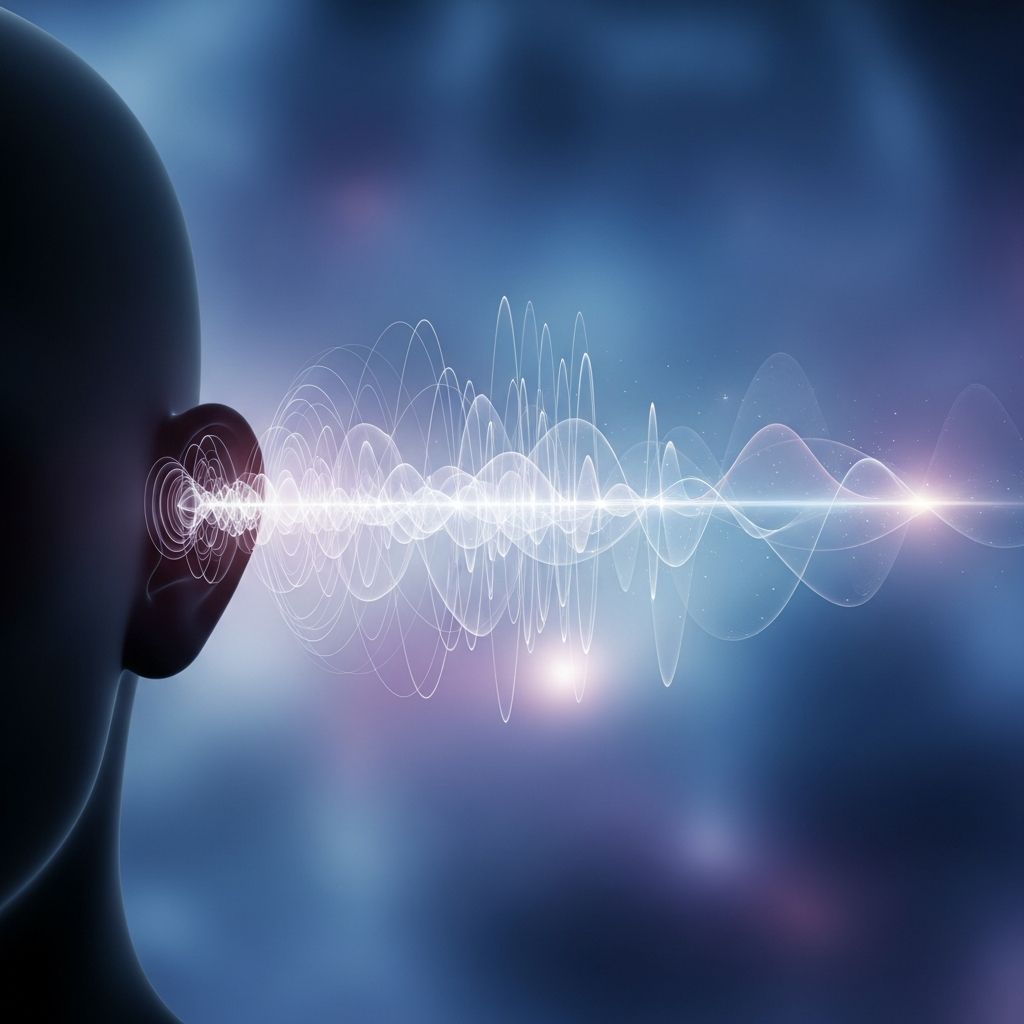
Clairaudience represents one of the most intriguing dimensions of extrasensory perception, offering individuals the capacity to perceive auditory information that extends beyond conventional human sensory capabilities. Derived from French origins—clair meaning clear and audience meaning hearing—this psychic ability enables certain individuals to receive messages, guidance, and information through sound vibrations that others cannot ordinarily detect.
The Fundamental Nature of Clairaudient Perception
Clairaudience functions as a distinct form of psychic reception that operates independently from the physical ear’s conventional mechanisms. Those who possess clairaudient abilities describe experiences involving the perception of voices, musical tones, whispers, or other auditory phenomena that have no identifiable physical source in their immediate environment. Unlike ordinary hearing, which relies on sound waves traveling through air to reach the ear, clairaudient perception appears to originate from non-physical realms or dimensions beyond the material world.
The manifestation of clairaudience varies significantly among individuals. Some report hearing complete sentences or phrases conveyed by what they believe are spiritual entities, guides, or deceased individuals seeking to communicate. Others experience subtler forms, such as the perception of distinct tones, musical passages, or ambient sounds that carry specific meanings or messages relevant to their current circumstances.
How Clairaudience Differs from Other Clair Senses
The psychic realm encompasses several complementary abilities collectively referred to as the “clair senses,” each utilizing different perceptual channels to access non-physical information. Understanding how clairaudience distinguishes itself from these related abilities provides essential context for comprehending the broader landscape of intuitive gifts.
| Psychic Ability | Primary Mechanism | Information Reception Method |
|---|---|---|
| Clairaudience | Clear Hearing | Perceiving voices, sounds, and auditory messages from non-physical sources |
| Clairvoyance | Clear Seeing | Receiving mental images, visions, or visual perceptions of distant or hidden events |
| Clairsentience | Clear Feeling | Perceiving emotional and physical sensations from external sources or environments |
| Claircognizance | Clear Knowing | Instantaneous understanding or knowledge without identifiable sensory input |
While clairvoyance emphasizes visual perception—enabling individuals to “see” mental images or remote locations—clairaudience operates through the auditory channel. Clairsentience involves perceiving physical or emotional sensations from external sources, a distinct mechanism from the hearing-based reception characteristic of clairaudience. Claircognizance provides instant knowing without passing through sensory channels at all, making it fundamentally different from the auditory nature of clairaudient reception.
The Experience of Clairaudient Manifestation
Individuals who develop or discover clairaudient abilities often describe diverse and nuanced experiences. The inner ear, sometimes called the “mind’s ear,” becomes the locus through which these messages arrive. These auditory perceptions feel distinct and separate from an individual’s internal narrator or self-directed thoughts, creating a clear demarcation between personal cognition and externally originating messages.
Common manifestations of clairaudience include:
- Hearing complete words, phrases, or sentences that appear to originate from sources other than one’s own mind
- Perceiving musical passages, songs, or instrumental compositions that seem to convey specific messages or synchronistic meanings
- Experiencing auditory phenomena during meditation, sleep, or dreams when the conscious mind is less engaged with external stimuli
- Detecting subtle whispers, tones, or frequencies that others present do not acknowledge or perceive
- Recognizing timed coincidences where songs, sounds, or voices align perfectly with thoughts, questions, or emotional states
Clairaudience as a Tool for Spiritual Communication
In spiritual traditions and metaphysical contexts, clairaudience serves as a communication conduit between the material realm and non-physical dimensions. Those who identify as clairaudient often describe receiving guidance from spirit guides, guardian angels, or other benevolent entities. This ability enables what many consider a form of spiritual dialogue, where information flows from higher consciousness or collective wisdom toward the individual receiver.
The experience often carries a quality of authenticity and clarity that distinguishes it from imagination or mental fabrication. Clairaudient individuals report that the information received frequently addresses their current situations, questions, or life circumstances with precision that would be difficult to attribute solely to subconscious processing or coincidence.
The Connection Between Clairaudience and Channeling
Clairaudience maintains a particularly close relationship with the practice of channeling, a process whereby individuals allow non-physical entities to communicate through them. Channelers frequently utilize clairaudient abilities to receive messages and transmit information from spiritual guides, angels, interdimensional beings, or other non-physical intelligences. Through clairaudience, a channeler perceives the thoughts, words, or guidance of these entities and subsequently communicates this information to others.
This relationship illustrates how clairaudience extends beyond simple reception of personal guidance into a framework for broader spiritual communication and information dissemination. Channeling through clairaudience represents a specialized application where the ability serves not only the individual’s personal development but also functions as a bridge for collective healing and spiritual wisdom.
Recognizing Clairaudient Signals in Daily Life
Many individuals possess latent clairaudient abilities without recognizing these capacities as genuine psychic phenomena. Everyday experiences often contain subtle indicators of emerging or developing clairaudience that remain unidentified due to lack of awareness or cultural normalization of such experiences.
Potential indicators of clairaudient sensitivity include:
- Experiencing unexplained warmth or tingling sensations in the ear region with no physiological explanation
- Noticing songs that begin playing at moments when specific thoughts occupy your mind, appearing too coincidental to dismiss
- Hearing your name called when no one is present, or recognizing a familiar voice in unfamiliar contexts
- Perceiving ringing or bell-like sounds in the ears, sometimes described as an “angel ring” by practitioners
- Receiving advice or information through auditory means that proves remarkably accurate or helpful in subsequent situations
- Detecting pressure sensations in the ear region accompanying moments of intuitive clarity or spiritual insight
Developing and Refining Clairaudient Abilities
While some individuals appear to possess natural clairaudient sensitivity from early life, research and practitioner accounts suggest that clairaudience can be cultivated and strengthened through intentional practice and awareness development. The process involves learning to distinguish between authentic clairaudient messages and the noise of ordinary mental activity.
Development of clairaudience typically involves creating conditions conducive to receiving subtle auditory messages. Meditation practices, particularly those emphasizing inner listening and silence, provide foundational training. As the conscious mind becomes quieter and less dominated by thought activity, the capacity to perceive subtle auditory information naturally strengthens.
Maintaining a receptive attitude and trusting the information received strengthens clairaudient channels over time. Many practitioners recommend keeping records of messages received, noting their accuracy and relevance, which builds confidence in the authenticity of the communication and deepens the connection to spiritual guidance.
Understanding Clairaudience Beyond Literal Voice Hearing
A common misconception about clairaudience involves the assumption that it invariably manifests as hearing distinct human voices. While some clairaudient individuals do experience clear verbal communication, many others perceive auditory information through subtler means that don’t necessarily involve hearing recognizable words or sentences.
Clairaudience can manifest as symbolic sounds, musical tones, or auditory patterns that convey meaning through resonance and frequency rather than linguistic content. A single sustained tone might communicate approval or encouragement, while dissonant tones might indicate caution or misalignment. Musical passages can carry complex emotional or intuitive information that the receiver understands holistically without requiring translation into words.
Clairaudience and Telepathy: Related Yet Distinct
Clairaudience and telepathy both represent forms of non-ordinary communication that bypass conventional sensory channels, yet they differ in important ways. Telepathy involves direct mind-to-mind transmission of thoughts, emotions, or information between individuals, occurring without intervention of traditional sensory perception. Unlike clairaudience, which manifests through auditory channels, telepathy represents an immediate transfer of mental content that carries no sensory component.
While clairaudience typically involves perceiving voices or sounds, telepathy functions as a more abstract exchange of pure thought or consciousness. Some individuals possess both abilities, but they represent distinct mechanisms of non-ordinary perception and communication.
The Psychological and Spiritual Dimensions
Clairaudience occupies an interesting intersection between psychological phenomena and spiritual experience. Some approaches view clairaudient experiences as manifestations of the subconscious mind—perhaps accessing intuitive knowledge or processing information below the threshold of conscious awareness. Other perspectives emphasize the spiritual dimensions, interpreting clairaudience as genuine communication with non-physical intelligences or collective consciousness.
Rather than requiring adherence to any single interpretive framework, clairaudience can be understood as a multifaceted phenomenon that may encompass psychological, spiritual, and intuitive dimensions simultaneously. Individuals need not commit to specific metaphysical beliefs to recognize and develop their clairaudient capacities or to benefit from the guidance and information these abilities provide.
Practical Considerations for Clairaudient Development
For those interested in recognizing or cultivating clairaudient abilities, several practical approaches prove beneficial. Creating dedicated quiet time for inner listening establishes the psychological and environmental foundation for perceiving subtle auditory messages. Many practitioners find that consistent meditation practice substantially enhances their capacity to distinguish genuine clairaudient signals from mental chatter.
Journaling received messages, noting patterns, and tracking the accuracy of information supports the development of discernment and confidence in clairaudient channels. Working with experienced practitioners or joining development groups provides community support and validation while offering opportunities to learn from others’ experiences and insights.
Maintaining grounded, healthy skepticism while remaining open to genuine clairaudient experiences protects against self-deception while allowing authentic intuitive guidance to flourish. This balanced approach enables individuals to develop clairaudience while maintaining psychological stability and clarity regarding the nature and limitations of these abilities.
Frequently Asked Questions About Clairaudience
Is clairaudience the same as hearing voices associated with mental health conditions?
While clairaudience involves hearing voices, it differs significantly from auditory hallucinations associated with psychiatric conditions. Clairaudient voices typically feel distinct from one’s own mind, convey coherent and meaningful messages, and the individual maintains clarity regarding the difference between these experiences and ordinary thought. Mental health-related voices often feel intrusive, distressing, or nonsensical. Professional evaluation can help distinguish between these experiences.
Can clairaudience be developed if I don’t naturally possess it?
Evidence suggests that clairaudience can be cultivated through consistent practice, meditation, and intentional development. While some individuals demonstrate natural sensitivity, others can strengthen clairaudient abilities through disciplined training and practice, particularly when combined with openness and receptivity to subtle forms of perception.
How do I know if my clairaudient experiences are genuine?
Authentic clairaudient messages typically demonstrate consistency, relevance to your current circumstances, alignment with higher principles of wisdom and compassion, and accuracy when tested against subsequent events. Genuine guidance usually feels calm and clear rather than chaotic or demanding. Maintaining an objective, questioning stance while remaining open supports accurate discernment of authentic communication.
Can everyone develop clairaudience?
While individuals vary in their natural sensitivity and aptitude, most people can develop some degree of clairaudient perception with consistent practice. Some naturally gravitate toward auditory psychic channels while others more readily access information through visual, kinesthetic, or knowing-based channels. Individual variation in natural ability does not preclude meaningful development of clairaudience.
References
- Clairaudience Explained: A Nondual Perspective on Psychic Hearing — Awakening Collective. https://www.awakeningcollective.org/clairaudience.html
- What Is Clairaudience and How to Develop It — Gaia, Gabriel Soca. 2025-03-15. https://www.gaia.com/article/what-is-clairaudience-and-how-to-develop-it
- From Clairalience to Clairvoyance: Your Psychic Gifts Explained — College of Psychic Studies. https://www.collegeofpsychicstudies.co.uk/enlighten/clairalience-to-clairvoyance-your-psychic-gifts/
- The 8 Clair Senses: Which Psychic Ability Do You Have? — Liz Roberta. 2020-07-01. https://lizroberta.com/2020/07/01/the-8-clair-senses-which-psychic-ability-do-you-have/
- What Is Clairaudience and How Can I Develop This Psychic Ability? — Keen. https://www.keen.com/articles/psychic/what-is-clairaudience-and-how-can-i-develop-this-psychic-ability
Similar Articles







Read full bio of Sneha Tete