Chinese Zodiac Trines: Second Trine Palmistry Guide
Discover how the second trine of the Chinese zodiac manifests in palmistry, blending ancient hand reading with zodiac energies for profound insights.
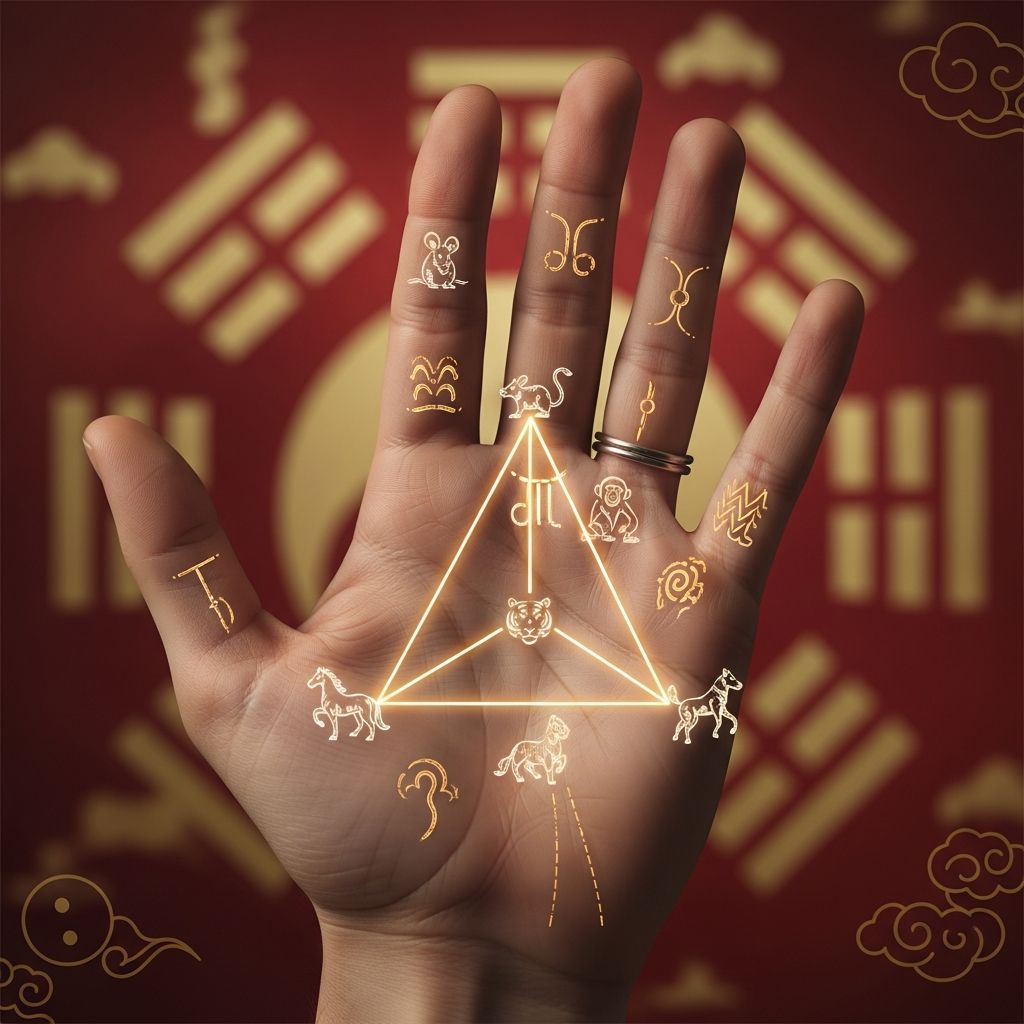
Chinese palmistry merges the wisdom of hand analysis with the cyclical energies of the zodiac, particularly through its three trines that group animals by shared traits. The second trine, comprising the Rat, Dragon, and Monkey, embodies cleverness, ambition, and adaptability. This article delves into how these zodiac influences appear in palm features, drawing from ancient I Ching trigrams and elemental balances to interpret life paths, fortunes, and personal strengths.
Foundations of Chinese Hand Analysis
Rooted in over three thousand years of tradition, Chinese palm reading examines lines, mounts, and shapes to predict personality and destiny. Unlike Western methods, it emphasizes the Five Elements—Wood, Fire, Earth, Metal, Water—and their interactions with Yin-Yang principles. Hands are divided into zones corresponding to I Ching trigrams, forming a Ba Gua map similar to Feng Shui layouts.
The palm’s central ming tang or courtyard reflects vitality; a bright, healthy center signals prosperity, while dark or sunken areas warn of challenges. Principal lines—heaven (heart), man (head), and earth (life)—represent cosmic forces influencing daily existence.
- Hand Shapes by Element: Square palms with short fingers indicate Metal types (resilient, structured); slender hands with long fingers suggest Wood (creative, growth-oriented); round, fleshy palms denote Water (intuitive, fluid); pointed fingers on elongated palms signal Fire (passionate, dynamic); thick palms point to Earth (stable, nurturing).
- Male left hands and female right hands are primary for readings, aligning with gender-based energy flows.
The Second Zodiac Trine: Core Characteristics
The Chinese zodiac divides into trines: first (optimists: Rabbit, Goat, Pig), second (shrewd strategists: Rat, Dragon, Monkey), and third (doers: Tiger, Horse, Dog). Second trine individuals excel in intellect, charisma, and resourcefulness, traits mirrored in palmistry through dynamic lines and prominent mounts.
| Zodiac Sign | Key Traits | Palm Indicators |
|---|---|---|
| Rat | Cunning, adaptable, prosperous | Strong Sun line, flexible fingers |
| Dragon | Ambitious, powerful, visionary | High mounts, bold life line |
| Monkey | Witty, inventive, social | Multiple fate lines, star markings |
These signs thrive on transformation, often showing palms with upward-branching lines symbolizing climbing success.
Palm Zones and Trigram Influences
The palm features eight trigrams around its edges, each tied to family, directions, and fortunes. Happiness trigrams—Sun, Li, Kun—highlight wealth and recognition when marked positively.
- Sun Trigram: Stars, tridents, or upward lines promise prosperity; crosses signal financial losses.
- Li Trigram: Clear mounts bring fame; islands denote scandals.
- Kun Trigram: Fleshy areas ensure family harmony; chains indicate emotional strife.
For second trine natives, pronounced mounts in Chien (leadership) suggest generational wealth, especially for Dragons heading powerful lineages.
Decoding Major Lines for Trine Energies
Life Line: Vitality and Longevity
A deep, curving life line from Jupiter mount indicates robust health and adventure, amplified in Dragons by bold sweeps. Faint or broken lines warn of health dips, common in overactive Monkeys.
Head Line: Intellect and Decisions
Straight head lines denote logical Rat minds; forked ends reveal Monkey versatility. Overlaps with life line show caution, while separations highlight bravery.
Heart Line: Relationships and Emotions
Curved heart lines favor passionate Dragons; straight ones suit pragmatic Rats. Branches toward Sun line predict supportive partnerships.
Secondary Lines and Zodiac Fortunes
Fate, Sun, marriage, and children lines refine predictions. A long Sun line, or Six Elegance, brings wealth, fame, and spiritual gains—potent for Monkeys with trident endings.
- Marriage Lines: Multiple shallow lines suggest complex romances for charming Rats; deep ones under pinky indicate stable unions.
- Children Lines: Deep verticals below pinky predict sons; faint ones daughters. Interruptions signal challenges.
- Health Line: Clear paths ensure well-being; islands point to ailments tied to elemental clashes.
Second trine palms often feature paired fate lines, hinting at career shifts or dual incomes.
Elemental Clashes and Harmony
Palm shapes must align with birth year elements to avoid conflicts. Metal hands clashing with Water years predict struggles; harmonious matches boost trine strengths like Dragon’s fire.
Practical Palm Reading Techniques
To read your palm:
- Examine hand shape for element.
- Assess ming tang health.
- Trace major lines for flow.
- Check trigram mounts for fortune markers (stars protect, crosses hinder).
- Note finger lengths: long index for leadership (Dragons), flexible pinkies for wit (Monkeys).
Well-formed mounts across all trigrams promise high status and servants.
Second Trine Signs: Detailed Palm Profiles
Rat: The Strategic Accumulator
Rat palms show resilient Metal influences with strong Sun lines for wealth accumulation. Flexible thumbs aid negotiation; watch for head line islands signaling overthinking.
Dragon: The Imperial Force
Dragons boast elevated mounts, especially Chien, for authority. Bold life lines curve dramatically, reflecting charisma; faint heart lines warn of isolation.
Monkey: The Inventive Trickster
Monkey hands feature multiple branches and stars, denoting ingenuity. Airy Fire shapes with pointed fingers excel in arts; chained fate lines suggest instability.
Integrating Palmistry with Modern Life
While ancient, Chinese palmistry offers timeless guidance. Use it for career choices—strong Li trigrams favor public roles—or relationships, via marriage line clarity. Combine with zodiac cycles for annual forecasts.
Frequently Asked Questions
Which hand do I read for palmistry?
Males use the left, females the right, per Yin-Yang traditions.
Can palmistry predict exact events?
It reveals tendencies and potentials, not certainties, based on line qualities and marks.
How do trines affect readings?
Second trine enhances intellect-focused interpretations, emphasizing adaptability in lines.
Is Chinese palmistry linked to astrology?
Yes, via zodiac trines and I Ching, similar to astro-palmistry blends.
What if my palm lacks a Sun line?
Potential for success exists through other strong features like fate lines.
Advanced Markings and Warnings
Stars and squares safeguard fortunes; islands and crosses disrupt. Blue-black ming tang foretells accidents—bolster with Feng Shui alignments.
Second trine natives benefit from raised flesh across trigrams, amplifying zodiac ingenuity for enduring success.
References
- Dictionary of Chinese Palmistry Symbols — BookLocker.com. N/A. https://assets.booklocker.com/pdfs/10706s.pdf
- Chinese Palm Reading — WOFS.com. N/A. https://www.wofs.com/chinese-palm-reading/
- How Chinese Palmistry Works: How to Read & Palm Lines Meaning — China Educational Tours. N/A. https://www.chinaeducationaltours.com/guide/culture-palmistry-meaning.htm
- How Chinese Palm Readings Work — Keen Articles. N/A. https://www.keen.com/articles/spiritual/how-chinese-palm-reading-work
- Chinese Fortune Telling — Wikipedia. N/A. https://en.wikipedia.org/wiki/Chinese_fortune_telling
Similar Articles







Read full bio of Sneha Tete