
Understanding Astrological Houses and Life Domains
Explore how the 12 astrological houses map different areas of your life and personality.
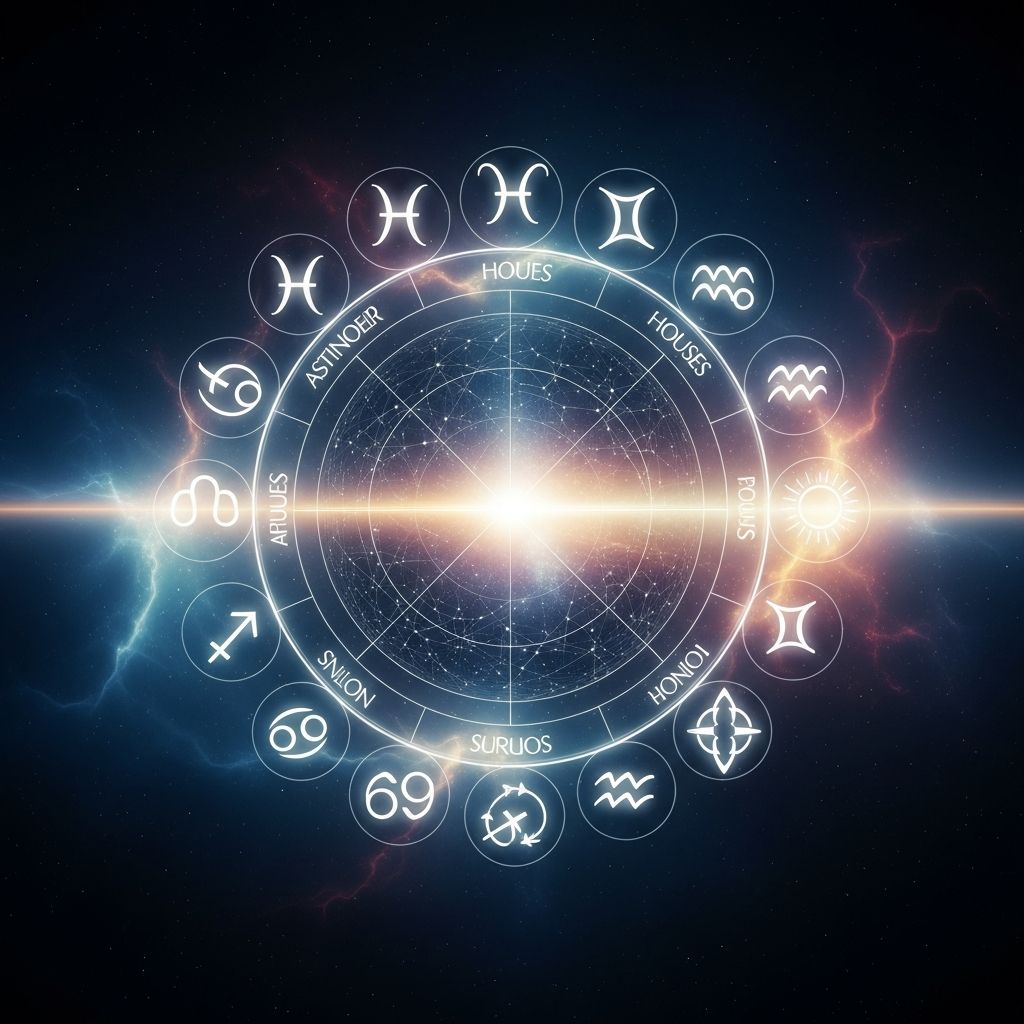
Astrology operates on the principle that the cosmos is divided into distinct sectors, each governing particular dimensions of human experience. These sectors, known as astrological houses, form the foundation of birth chart interpretation. Rather than focusing solely on planetary positions or zodiac signs, houses represent the stages upon which life unfolds—the theaters where your personal drama plays out across different life areas. Understanding these twelve domains provides insight into why certain patterns emerge in your relationships, career, finances, and inner world.
The division of the zodiac into twelve houses creates a map that astrologers use to understand not just who you are, but where and how different aspects of your personality and life circumstances manifest. Unlike planetary positions, which remain constant across all birth charts, house placements are uniquely personal—they depend on your exact birth time and location. This personalization makes houses one of the most revealing elements of your astrological profile.
The Architecture of Your Birth Chart
Your birth chart wheel begins at the eastern horizon—the point where the sun rises in the sky. This position marks the starting point of the first house and is called your rising sign or ascendant. From there, the houses progress counter-clockwise around the chart, with each house representing approximately two hours of the zodiac’s daily rotation.
The chart divides naturally into two major groupings: the personal houses (1-6) and the collective or transpersonal houses (7-12). The first six houses focus on your immediate environment, personal development, and private sphere. The second six houses turn outward toward relationships, public life, and your place within the broader world. This fundamental division illustrates astrology’s view of human development—from self-awareness toward connection and contribution.
Personal Houses: Building Your Foundation (1-6)
First House: Identity and New Beginnings
The first house occupies the eastern horizon of your chart and governs self-presentation, appearance, and vital life force. This house shapes how others perceive you in first encounters and influences your natural approach to fresh starts. The sign inhabiting your first house cusp determines your rising sign, which often reflects personality traits that others notice before they know your sun sign.
Planets positioned here amplify their influence on your outward demeanor and personal magnetism. For instance, Mars in the first house might express through assertiveness and physical confidence, while Venus could enhance natural charm and aesthetic awareness. Transits through this house often coincide with shifts in how you present yourself to the world or changes in your immediate surroundings.
Second House: Resources and Self-Worth
The second house manages all material dimensions of existence: money, possessions, income, and physical sensations. Beyond financial matters, this house reflects your relationship with abundance, your earning capacity, and your sense of personal value. It encompasses how you use your five senses to engage with the world and what brings you physical comfort.
Planets here influence your earning patterns and spending habits. Strong placements might indicate financial acumen or generous sharing, while challenging aspects could suggest material concerns or lessons around self-worth. Your second house reveals not just how much you earn, but your fundamental beliefs about what you deserve.
Third House: Communication and Immediate Circles
The third house governs communication, learning, siblings, and local environment. This domain includes how you think and express yourself verbally, your curiosity about the world, and your daily interactions with neighbors and community members. It rules short-distance travel, transportation, libraries, schools, and the casual connections that populate your everyday life.
This house reflects your communication style and intellectual approach. Mercury placements here often enhance verbal skills and mental agility, while a crowded third house might indicate a naturally social person with many siblings or close neighborhood ties. The third house essentially maps your immediate social ecosystem and mental processing habits.
Fourth House: Home and Emotional Foundations
Sitting at the very bottom of the chart wheel, the fourth house symbolizes home, family roots, parents, and foundational security. Often compared to a basement vault, this house safeguards your childhood memories, family narratives, and the emotional bedrock upon which you build your life. It describes your relationship with your parents (particularly the mother figure), your attitude toward family obligations, and what “home” means to you psychologically.
Planets in the fourth house color your domestic preferences and family dynamics. Venus here might create a love of beautiful home environments, while Saturn could drive minimalist or austere décor choices. A Jupiter transit through this house often indicates expansion of family or home circumstances, such as relocating to a larger space or welcoming new family members.
Fifth House: Creativity and Personal Expression
The fifth house rules creativity, romance, pleasure, children, and self-expression. This domain covers all forms of artistic endeavor, hobbies, games, and activities undertaken purely for joy. It also governs romantic attraction, sexuality, and your capacity for play and spontaneity. Additionally, this house describes your relationship with children—whether your own or those you mentor—and your creative potential.
Planets positioned here shape what brings you joy and how you express your authentic self. The fifth house reveals whether you’re naturally drawn to performance, creative pursuits, or romantic adventure. Uranus transiting this house, for example, disrupts established patterns and invites experimentation with new forms of entertainment or unconventional romantic connections.
Sixth House: Work and Wellness Routines
The sixth house encompasses daily work, health, fitness, nutrition, and service to others. Unlike the tenth house, which governs career and public reputation, the sixth house focuses on the practical aspects of employment—your daily tasks, work environment, and relationship with productivity. It also rules physical health, wellness practices, and how you maintain your body and mind.
This house reveals your work ethic and approach to health management. Planets here influence your capacity for discipline and routine. A Mars transit through the sixth house can energize your workload but requires conscious pacing to prevent burnout. The sixth house essentially maps how you translate intention into daily action.
Collective Houses: Expanding Beyond Self (7-12)
Seventh House: Partnership and Relationships
The seventh house directly opposes the first house and governs romantic partnerships, marriage, significant relationships, and commitment. This domain explores how you engage in close partnerships and what qualities you seek in others. It describes your approach to intimacy, compromise, and shared goals within relationships. The cusp of this house is called the descendant, which astrologers use to understand your relationship patterns and ideal partner qualities.
Venus transits to this house typically bring sweetness to existing relationships and magnetize new connections into your sphere. The seventh house essentially describes the relational mirror—how you perceive yourself through partnership and what you attract in romantic and business partners.
Eighth House: Transformation and Shared Resources
The eighth house addresses transformation, inheritance, sexuality, shared finances, and psychological depth. This house explores taboo subjects, hidden motivations, and profound emotional processes. It governs inheritances, taxes, insurance, and other people’s money. Psychologically, it represents your capacity for psychological rebirth and confronting shadow aspects of yourself.
Planets here often indicate someone comfortable exploring psychological depths or managing other people’s resources. This house traditionally carries intensity because it deals with life’s most transformative experiences and psychological mysteries.
Ninth House: Philosophy and Expansion
The ninth house occupies the opposite position from the third house. While the third house addresses local communication and daily rituals, the ninth house encompasses higher learning, philosophy, long-distance travel, spirituality, and belief systems. This domain covers formal education, religious exploration, cultural immersion, and the search for meaning. It governs international travel, publishing, and sharing wisdom with broader audiences.
The ninth house describes the wanderer and seeker within you—the aspect that hungers for expanded perspectives and deeper understanding. Planets here amplify your philosophical inclinations and capacity for cross-cultural engagement.
Tenth House: Public Presence and Achievement
Positioned at the very top of the chart wheel, the tenth house is the most public and visible sector. This house governs career, public image, authority, reputation, and life achievements. The cusp of the tenth house is called the midheaven and represents your professional direction and public standing. This domain describes how the world perceives you professionally and what legacy you build through your work.
The tenth house shows your relationship with authority, whether you naturally assume leadership roles, and what kind of impact you make publicly. Unlike the sixth house’s daily work tasks, the tenth house reveals your larger career narrative and public accomplishments.
Eleventh House: Community and Future Vision
The eleventh house rules friendship, community networks, group involvement, and future aspirations. This domain describes the circles you move within, causes you champion, and visions you hold for collective progress. It governs social networks, activism, humanitarian concerns, and your place within broader communities.
Planets here shape your social circle and collective involvement. This house reveals whether you’re naturally drawn to group dynamics and large-scale movements or prefer intimate friendships.
Twelfth House: Spirituality and the Subconscious
The twelfth house completes the zodiac wheel and governs spirituality, the subconscious mind, hidden matters, solitude, and transcendence. This domain encompasses dreams, meditation, spiritual practices, and the parts of yourself that remain beneath conscious awareness. It also covers institutions like hospitals and prisons, as well as hidden enemies or self-undoing patterns.
The twelfth house represents the dissolution of ego and connection to something larger than individual identity. Planets here often indicate past-life influences or a natural inclination toward spiritual exploration.
Reading Your House Placements: Key Concepts
Empty Houses and House Rulers
Not every house contains planets in your birth chart—in fact, most people have several empty houses. An empty house doesn’t mean that area of life is unimportant. Instead, consider the planet that rules that house sign. Its placement, sign, and aspects reveal how that life domain operates in your chart. For example, if your fifth house (creativity) is empty but ruled by Mars in your tenth house, your creative expression likely channels directly into your public work or career.
Stelliums and Concentrated Influence
When three or more planets gather in the same house, this grouping is called a stellium. The energies of these planets intertwine, creating concentrated influence in that life area. A stellium involving the Sun, Moon, and Venus in one house means those domains receive heightened emphasis and development in your life story. Someone with a fourth house stellium, for instance, likely experiences profound family dynamics and significant emotional processing connected to home and origins.
Transits Through Houses
As planets move through your chart over time, they transit different houses, activating various life domains. A Mars transit through the third house might bring animated neighborhood dynamics or increased communication activity. A Jupiter transit through the fourth house often expands family circumstances. Understanding house transits helps you anticipate which life areas will receive focus during specific periods.
Integrating Houses Into Your Self-Understanding
The twelve houses function as a comprehensive life map, revealing not just personality traits but the actual circumstances and experiences your chart suggests. By examining which houses contain planets, which house your sun and moon occupy, and which houses receive transiting planetary attention, you gain a sophisticated understanding of your life’s architecture.
Houses transform astrology from abstract symbolism into practical insight. They answer not just “who am I?” but “where do these traits and themes show up in my actual life?” This contextual layer makes astrological interpretation infinitely more useful and personally relevant.
References
- The 12 Houses in Astrology — CHANI. Accessed March 2026. https://www.chani.com/blogs/the-12-houses-in-astrology
- What are houses in astrology, and what does each one mean? — YouTube Educational Content. Accessed March 2026. https://www.youtube.com/watch?v=m7nSESHGYvk
- The 12 Houses of the Zodiac, Defined — Astrostyle. Accessed March 2026. https://www.astrostyle.com/astrology/12-zodiac-houses/
- A Brief Introduction to Astrology: Houses — Astrodienst. Accessed March 2026. https://www.astro.com/astrology/in_house2_e.htm
- Astrology Houses Explained: What the 12 Houses Mean For You — Athr Beauty. Accessed March 2026. https://athrbeauty.com/blogs/goodvibesbeauty/astrology-houses-explained-what-the-12-houses-mean-for-you
- Houses: How does astrology work? — Co-Star Astrology. Accessed March 2026. https://www.costarastrology.com/how-does-astrology-work/houses
Similar Articles








Read full bio of medha deb